A pool that feels perfect in July can be disappointingly cold in April, May and late October. The right pool heat pump installation Costa del Sol can change that, turning a short summer-only pool into a comfortable part of daily life for far more of the year – without relying on an inefficient old heater or guessing at running costs.
For villa owners, second-home owners and property managers, the best result is rarely about buying the largest unit available. It comes from choosing a heat pump that suits the pool, placing it properly, protecting the warmth you have paid to create and having local support when it is needed.
Why professional pool heat pump installation matters
A heat pump draws warmth from the outside air and transfers it to pool water. Costa del Sol conditions are well suited to this approach: there is generally enough ambient warmth for efficient operation through much of the swimming season. But performance still depends on the details of the installation.
An undersized unit may run for long periods without bringing the water up to the temperature you want, especially in spring or after a cool spell. An oversized unit can cost more to buy than necessary. Poor pipework, restricted water flow, unsuitable electrics or a cramped location can also reduce efficiency and create avoidable faults.
Professional installation begins with the pool rather than a catalogue. Pool volume matters, but so do exposure to wind, shading, whether the pool is covered, the desired water temperature and how quickly you expect the pool to recover after cooler weather. A family using the pool most weekends has different requirements from a holiday rental where guests expect warm water on arrival.
Getting the size right for your pool
Heat-pump capacity is often discussed in kilowatts, yet the figure alone does not tell the whole story. Manufacturer ratings are measured under specific air and water temperatures. A model that performs very well in high summer may take considerably longer to heat a pool during a breezy March evening.
A sensible recommendation considers the pool’s surface area as well as its volume. Heat escapes mainly from the water surface through evaporation, particularly overnight and in exposed hillside or coastal settings. A deep pool does not always lose heat in the same way as a wide, shallow pool with a large surface area.
The aim should be realistic, comfortable performance. If you want to hold water at around 27 to 29°C from spring into autumn, the system should be selected for those shoulder months, not only for August. If the pool is used only in peak summer, a more modest solution may be entirely appropriate.
A solar cover changes the calculation
A solar cover is not an optional extra added at the end of the project. It is one of the most effective ways to retain heat, reduce evaporation and lower the amount of work required from the heat pump. Covering the pool overnight, and whenever it is not being used, can make a substantial difference to both warm-up time and electricity consumption.
It also helps keep debris out of the water, which can reduce the burden on filtration and routine cleaning. For properties that stand empty for periods, a durable cover is particularly valuable: it protects the temperature you have built up while helping the pool remain presentable between visits.
There are occasions when a cover is less convenient, such as a pool with an awkward shape or a busy rental schedule. Even then, it is worth discussing a practical covering system rather than dismissing it. The running-cost difference can be meaningful over a season.
Choosing the right location and connections
A heat pump needs clear airflow. It should be installed outdoors where it can draw in and discharge air freely, rather than being squeezed into a small enclosed plant room or tight corner. Releasing cold air is a normal part of its operation, so the location should also be considered in relation to seating areas, bedrooms and neighbouring properties.
Access for servicing matters as much as the first installation. A unit tucked behind fixed screening, landscaping or equipment may look neat initially but becomes difficult to inspect or repair later. The best position balances airflow, appearance, sound considerations, pipe runs and safe access.
The plumbing arrangement should allow the heat pump to receive the correct water flow, generally after filtration and treatment equipment. A bypass arrangement enables flow to be adjusted and provides practical flexibility for maintenance. Existing pumps, filters and pipework need to be assessed rather than assumed to be compatible.
Electrical work also deserves proper attention. The supply, protection and cable route must be suitable for the selected equipment and local conditions. This is not an area for an improvised connection, particularly at a rental property where reliability and safety are essential.
What a well-managed installation should include
A clear site visit removes uncertainty before work begins. It should establish the pool dimensions, current equipment, available electrical supply, likely unit position, pipe routes and any access restrictions. It is also the moment to discuss how the property is used and what you want from the pool season.
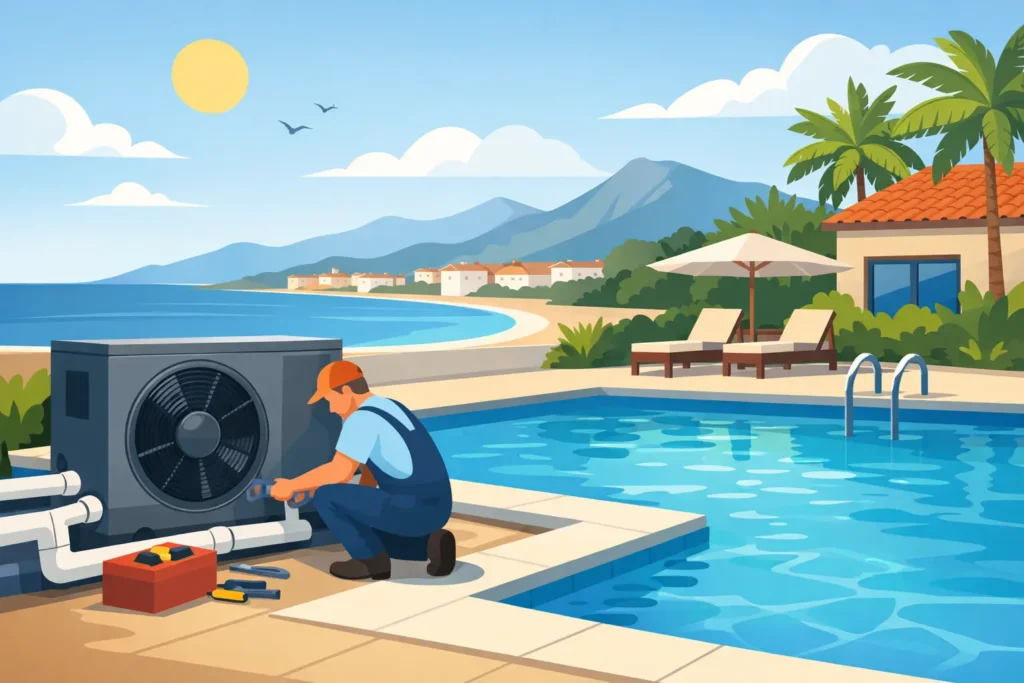
Once the specification is agreed, the work should be planned to minimise disruption. This usually includes positioning the unit on a secure, level base; making the plumbing connections; fitting valves and controls; completing the electrical connection; and commissioning the system. The installer should then check water flow, confirm operation and explain the controls in straightforward terms.
At Eco Pool Heaters, recommendations are tailored to the property rather than based on a one-size-fits-all estimate. As a trusted Norsup partner and installer, the team supplies heat pumps designed for Mediterranean conditions, backed by five years of full cover and ten years on the heat exchanger. That combination of quality equipment, local fitting and continuing support gives owners a clear route to dependable pool heating.
Keeping running costs under control
Electricity use depends on more than the heat pump itself. Ambient temperature, wind, water temperature, pool size, heat loss and the price of electricity all affect the final figure. Anyone promising one fixed cost for every Costa del Sol pool is overlooking important variables.
The most economical approach is normally to heat the pool steadily and prevent unnecessary heat loss, rather than letting the water go cold and repeatedly demanding a rapid recovery. Set a sensible target temperature, use the solar cover consistently and run the filtration and heating schedule at suitable times for your property.
It is worth checking the wider pool system too. A tired circulation pump, blocked filter, leaks or inaccurate controls can all make a heating system work harder. Regular servicing keeps the water flowing correctly and gives potential problems a chance to be identified before they interrupt the season.
For second homes and holiday rentals
Remote ownership brings a different set of priorities. You may want the pool warm before you arrive, but do not want it heated unnecessarily while the property is empty. For rentals, consistency matters: guests are far more likely to enjoy the pool if the water has been prepared properly before check-in.
A tailored schedule, reliable controls and a local maintenance arrangement can take much of this responsibility away from the owner or manager. It also means that a small issue with equipment can be investigated quickly rather than becoming an expensive failure after weeks unattended.
Common questions before installation
Can a heat pump be added to an existing pool?
In most cases, yes. Existing pools are regularly upgraded, but the condition and layout of the current equipment must be checked first. Older pipework, an unsuitable circulation pump or limited electrical capacity may need attention as part of the project.
How long will it take to warm the water?
It depends on the starting temperature, pool size, weather and whether a cover is in use. Heating a cold pool from the beginning of the season takes longer than maintaining an already warm pool. A correctly sized heat pump and solar cover make the process far more predictable.
Will it work through winter?
A heat pump can operate in cooler conditions, but efficiency falls as air temperatures drop and heat loss rises. For most owners, the practical goal is to extend spring and autumn swimming rather than maintain summer water temperatures throughout winter. Your expected use should shape the specification from the start.
A properly planned installation is an investment in more enjoyable mornings, longer family weekends and a pool that adds value to the property for more of the year. Arrange an on-site assessment, ask the practical questions and choose a system designed around how you actually want to use your pool.