A pool can feel beautifully warm at 5 pm, then lose its comfort surprisingly quickly after sunset. For Costa del Sol homeowners who want to swim earlier in spring, later into autumn, or keep a holiday rental pool inviting, the question is practical: do solar pool covers retain heat? Yes. Used consistently, a properly fitted solar cover is one of the most effective ways to slow heat loss and protect the warmth already in the water.
A solar cover is not a heater in its own right. It will not turn a cold pool into a warm one overnight. Its value is in reducing the amount of heat your pool loses, particularly through evaporation, so any warmth from the sun or a heat pump lasts longer. That means more comfortable water and less energy required to maintain it.
Do solar pool covers retain heat effectively?
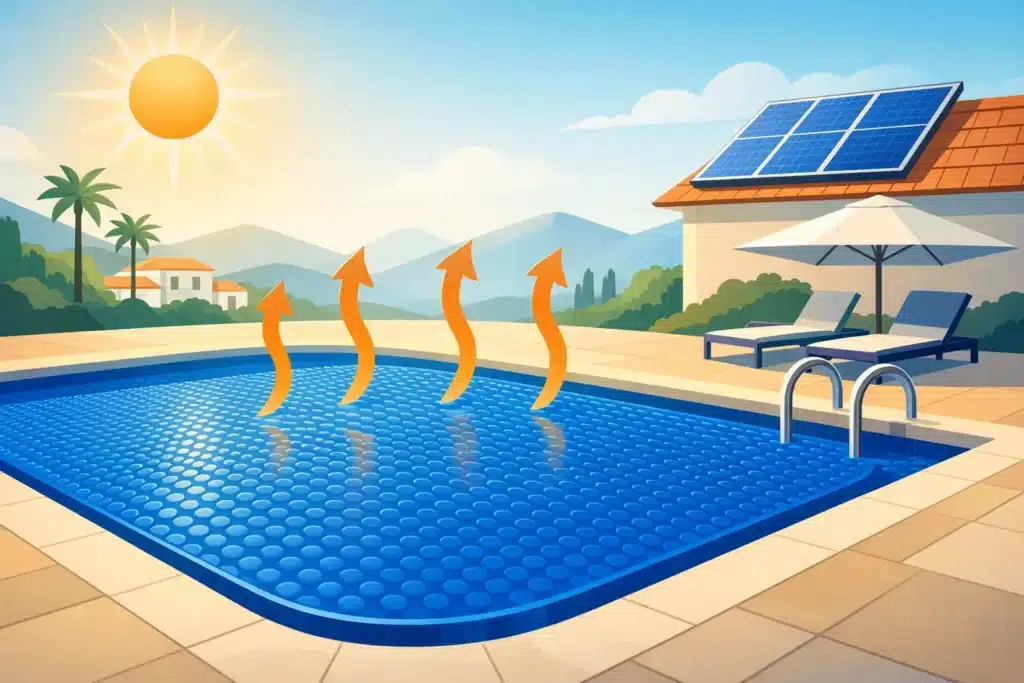
They do, because the surface of the water is where most pool heat escapes. When warmer water is exposed to cooler air, wind and dry conditions, evaporation carries away a significant amount of energy. A solar cover creates a barrier over that surface, greatly reducing evaporation and helping to keep the water temperature more stable overnight.
The familiar bubble-style design has another useful role. Its air cells absorb solar energy and transfer some of that warmth into the water during daylight. In strong Costa del Sol sunshine, this can make a noticeable contribution, especially on smaller pools and during the shoulder seasons. However, the greater benefit is normally retention rather than heat generation.
Think of it as putting a lid on a warm pan rather than leaving it uncovered. The heat source still matters, but less heat is wasted while you are not using the pool.
What difference can you expect?
The exact temperature benefit depends on the pool, the weather and how reliably the cover is used. In favourable sunny conditions, a solar cover may help lift water temperature by a few degrees over time. More commonly, owners notice that the pool does not feel as cold first thing in the morning and that a heater does not need to run as long to reach the desired temperature.
An exposed hillside villa pool in Mijas or Benahavís, where evening breezes are common, may lose heat faster than a sheltered courtyard pool in Marbella or Estepona. A larger, deeper pool also holds more water and needs more energy to warm. The cover still helps in both cases, but the result will not be identical.
Why evaporation matters more than most owners realise
Evaporation is not simply water disappearing from the pool. Every litre that evaporates takes heat with it. Wind speeds up this process, as does a large difference between water and air temperature. This is why a pool can lose warmth even after a hot, sunny day.
By covering the water when the pool is not in use, you reduce this heat loss and conserve water at the same time. There is also less need to top up the pool, which means fewer changes to the balance of chemicals and less strain on the filtration system over the season.
For second-home owners, the benefit is especially useful. A cover can keep conditions more stable between visits, rather than leaving a heated pool exposed day and night. For holiday rental properties, it can help preserve a better swimming temperature between guest changeovers without unnecessarily increasing electricity consumption.
A solar cover and heat pump work better together
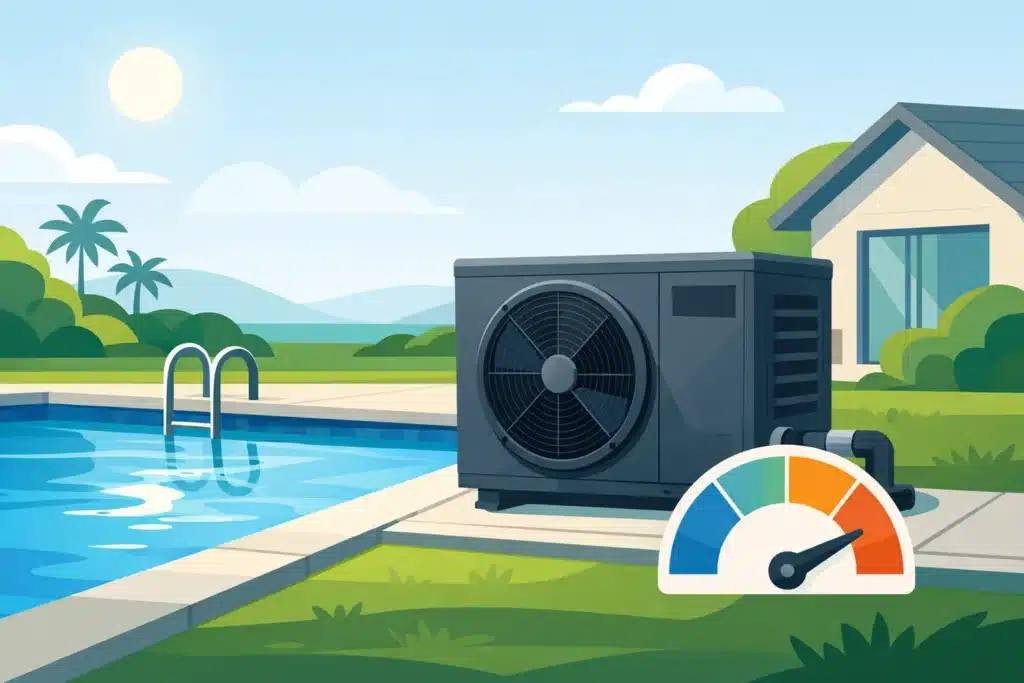
A solar cover delivers its best value when paired with an efficient pool heat pump. The heat pump provides controlled, dependable warmth; the cover helps prevent that warmth from escaping. This combination is far more efficient than heating uncovered water, particularly overnight.
A Norsup electric heat pump, correctly sized for the pool and local conditions, can extend the swimming season well beyond the hottest summer weeks. Add a durable solar cover and the system has less work to do to hold the set temperature. This can lower running costs while giving the pool a more consistent, comfortable feel.
The key phrase is correctly sized. A heat pump chosen only by the pool’s volume may underperform if the pool is in a windy position, used heavily, shaded for much of the day or left uncovered. Equally, a premium heat pump cannot make up for unnecessary heat loss from an open water surface. A tailored assessment considers the pool’s dimensions, exposure, desired swimming months and how the property is used.
When should you keep the cover on?
For heat retention, keep the cover on whenever the pool is not being used, especially overnight. That is the simplest and most effective routine. Covering the pool after an evening swim is particularly worthwhile, as it protects the warmth you have paid to create before cooler night air and breezes take effect.
During a sunny day, a solar cover can remain in place to absorb solar gain if nobody is swimming. If the pool is in constant use, it may be impractical to replace it repeatedly, but fitting it at the end of the day still makes a meaningful difference.
A reel makes this routine far easier. Without one, even a lightweight cover can feel awkward on a larger pool, and the cover is more likely to be left folded beside the terrace. A well-installed reel allows one person to remove and replace it in moments, protecting the cover from dragging, damage and unnecessary wear.
Choosing the right cover for a Costa del Sol pool
Not all solar covers offer the same lifespan or level of insulation. Thickness, material quality, UV protection and fit all matter. The intense sunshine that makes solar gain possible can also degrade poor-quality materials quickly. A cover suited to Mediterranean conditions should be durable enough to handle strong UV exposure and regular use.
Fit is equally important. The cover should sit neatly across the water surface with minimal gaps around steps, curves and corners. A cover that is badly cut or too small leaves more exposed water, reducing its ability to limit evaporation and heat loss.
For many residential pools, a traditional floating solar cover is the most practical choice. It is economical, easy to use and offers clear benefits. Other cover types may be better where appearance, safety requirements, automated operation or year-round protection are the priority. The right choice depends on whether your main goal is heat retention, safety, debris reduction, ease of use, or a combination of these.
The trade-offs to understand
Solar covers are highly effective, but they are not maintenance-free. They should be rinsed occasionally, stored sensibly when removed and inspected for brittle bubbles, tearing or edge damage. A damaged cover can become harder to handle and less effective.
They can also affect water chemistry if a pool is covered for long periods in very hot weather. Because less water evaporates and the pool receives less airflow, regular testing remains essential. Chlorine levels, pH and overall water quality should be checked as part of normal pool care. The cover should also be removed during chemical treatments where advised, and never used as a safety barrier unless it has been specifically designed and installed for that purpose.
There is a visual trade-off too. Some owners do not like seeing a cover on the pool during the day. That is understandable, but using it overnight alone can still produce worthwhile savings and improve morning water temperature.
Getting the most from your pool heating investment
The best results come from treating your pool as a complete system. A quality heat pump, a correctly fitted solar cover, clean filters, good water circulation and sensible temperature settings all work together. Neglecting one part often makes the others more expensive to run.
If your pool takes too long to heat, cools rapidly overnight or has become costly to maintain, the cause may be more than the heater itself. Exposure, cover condition, pipework, pump performance and controls can all influence the result. Eco Pool Heaters can assess these factors and recommend a practical solution suited to your property, rather than simply offering a one-size-fits-all product.
A solar cover is a modest addition that can protect a much larger investment in pool heating. Put it on after your next swim, then notice how the water feels the following morning – that small routine is often where a longer, more efficient swimming season begins.