A pool can lose far more water than most owners expect during a warm, breezy Costa del Sol week. That loss is not simply an inconvenience requiring a top-up. Every litre that evaporates carries away heat, increases heating demand and leaves chemicals to be replaced more often. Knowing how to reduce pool evaporation is one of the most effective ways to make a residential pool more economical, comfortable and easier to manage.
For a villa used every day, a holiday home left unattended between visits, or a rental property where presentation matters, the answer is rarely one single adjustment. The best results come from combining a well-fitted cover with sensible heating settings, good water balance and practical protection from wind.
Why pool evaporation costs more than water
Evaporation happens when warm water molecules escape from the pool surface into the air. The warmer the water and the drier or windier the surrounding air, the faster that process becomes. This is why an uncovered pool can lose noticeable water even outside the peak summer months, particularly overnight when a heated pool is much warmer than the air around it.
The direct water cost is only part of the picture. As warm water evaporates, so does the energy used to heat it. Fresh top-up water is normally cooler, so the heating system then has to work harder to restore the desired temperature. Chemical levels can also become less stable, creating extra work for owners and maintenance teams.
On the Costa del Sol, sunshine is an advantage for pool enjoyment, but local conditions can still accelerate evaporation. Open hillside plots, coastal properties and pools exposed to afternoon breezes can all lose heat and water faster than a sheltered pool in the same area.
How to reduce pool evaporation with a solar cover
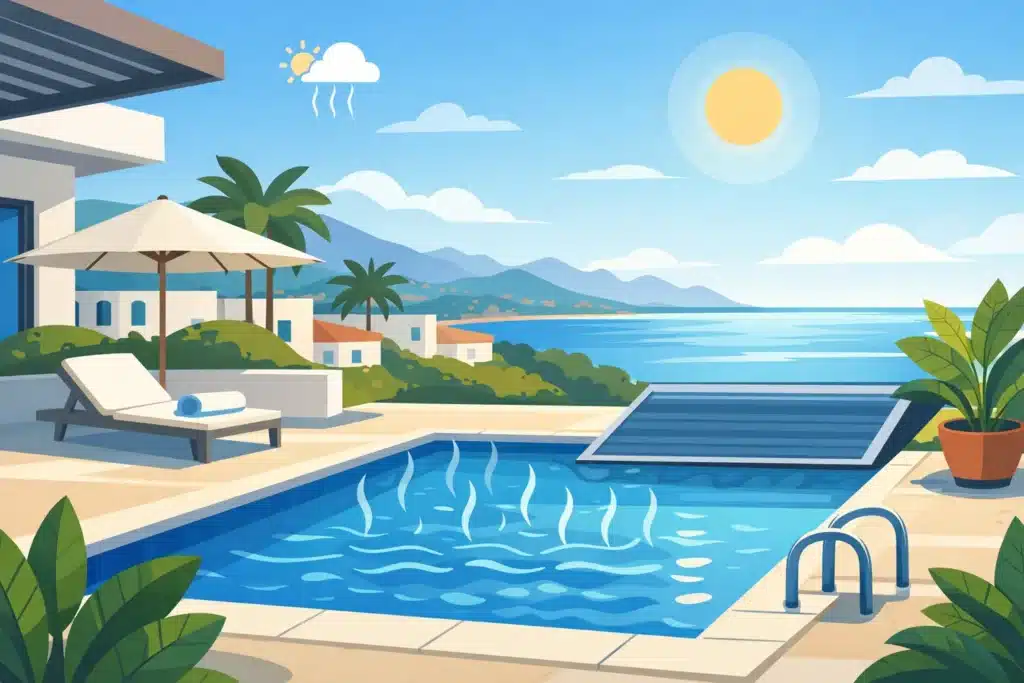
For most outdoor pools, a solar cover is the single most worthwhile measure. It creates a physical barrier across the water surface, greatly reducing the area exposed to moving air. A quality solar cover also captures solar warmth during the day and helps retain heat after sunset.
The most important detail is fit. A cover should sit neatly across the pool surface with minimal gaps around steps, curves and skimmer areas. An ill-fitting cover still helps, but wind can get underneath it and exposed edges continue to lose heat. Bespoke cutting is particularly worthwhile for freeform pools or pools with Roman ends.
Use the cover whenever the pool is not being used, rather than treating it as an occasional accessory. Covering the pool after an evening swim can make a marked difference by the following morning. For second homes and rental properties, it should be part of the routine between guest stays, alongside checking water level and treatment equipment.
There is a trade-off: solar covers need careful handling and regular cleaning. Leaves, dust and standing water on the surface should be cleared before rolling it away, otherwise debris can enter the pool and the cover may deteriorate sooner. A reel makes daily use much easier on larger pools and helps prevent dragging or tearing the material.
A properly specified solar cover can also improve the value of a heat pump. Rather than asking the heater to replace heat lost every night, the cover preserves a greater share of the warmth already produced. That means more consistent temperatures and lower running costs over a longer swimming season.
Keep water temperature realistic
A warmer pool evaporates faster. Raising the set temperature by only a few degrees can have a noticeable effect on energy use and water loss, especially during cooler or windy evenings. There is no universal ideal setting, because comfort depends on who uses the pool, the time of year and whether it is primarily for exercise, family use or guests.
For many Costa del Sol households, 27°C to 29°C provides comfortable swimming without placing unnecessary demand on the heating system. A pool used by young children or visitors during spring and autumn may reasonably need to be warmer. In that case, a good cover becomes even more essential.
Avoid heating the pool continually to a high temperature when the property is empty. A technician can help set an appropriate programme based on the pool volume, exposure, heat pump capacity and expected use. The aim is steady, efficient operation, not short bursts of expensive reheating after repeated heat loss.
Reduce wind across the pool surface
Wind is often the overlooked cause of rapid evaporation. It removes the humid layer of air directly above the water and replaces it with drier air, allowing more water to evaporate. Even a pleasant sea breeze can have a significant impact on an exposed pool.
Landscaping and screening can help, provided they are planned sensibly. A wall, fence, planted boundary or glazed windbreak may reduce airflow without making the terrace feel enclosed. The best solution depends on the layout of the property, prevailing wind direction and access needed for maintenance.
Avoid planting directly beside the pool simply to create shelter. Trees and dense shrubs can introduce leaves, pollen and roots, increasing cleaning requirements and affecting water quality. For many properties, a measured screen set back from the pool provides a better balance between protection, appearance and maintenance.
Maintain the right water level and circulation
Keeping the water at the correct level will not stop evaporation, but it helps the circulation system perform as intended. If the level drops too low, skimmers may draw in air and the pump can operate inefficiently. If it is too high, surface debris may not skim away effectively. Both situations can create avoidable maintenance issues.
Check the water level regularly, particularly during hot spells or after a period when the pool has been covered and unattended. If the level is falling unusually quickly, do not assume evaporation is the only cause. A leak in the pool shell, pipework, fittings or equipment may need investigation.
Effective filtration and balanced water chemistry also support the practical benefits of using a cover. Clean, balanced water is less likely to develop problems while covered, and a cover keeps out much of the debris that would otherwise consume sanitiser. However, never leave a pool covered for prolonged periods without maintaining suitable circulation and chemical treatment. Covers reduce the workload, but they do not replace proper pool care.
Choose heating equipment that works with the pool, not against it
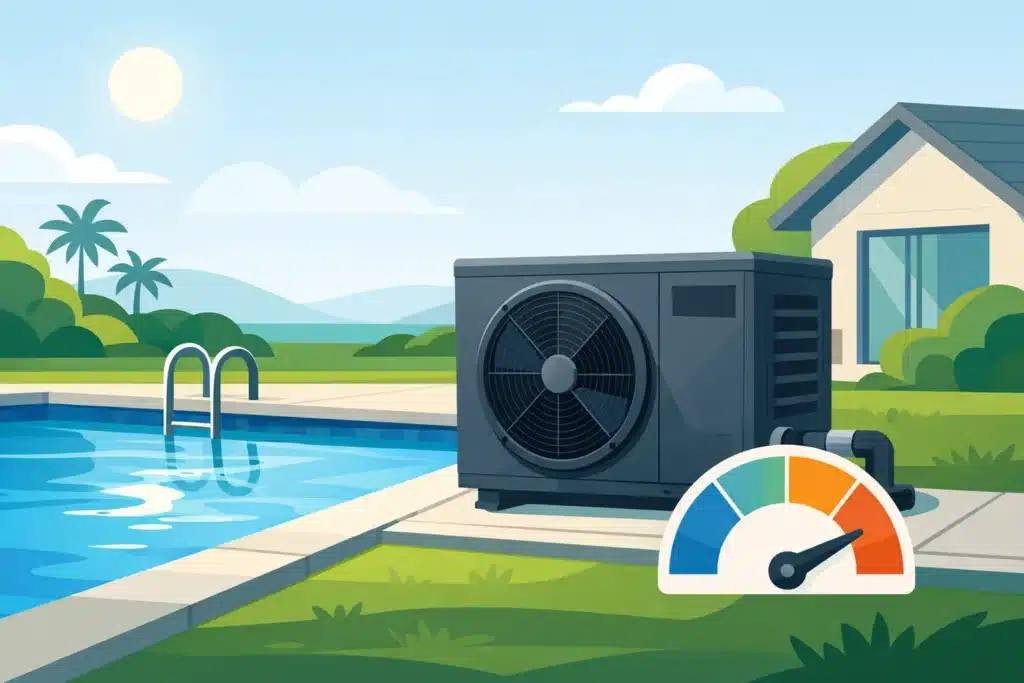
An efficient electric heat pump is designed to transfer heat rather than generate it in the same way as a conventional electric heater. When correctly sized and installed, it can provide dependable pool heating at a much lower running cost. Yet even the best equipment will waste energy if the pool is uncovered for long periods.
The most efficient approach is to treat the heat pump and cover as one system. Heat the water gradually, retain that heat with a solar cover, and use timers or smart controls to match the household’s routine. This is especially useful for owners who want to extend swimming into spring and autumn without paying for unnecessary overnight losses.
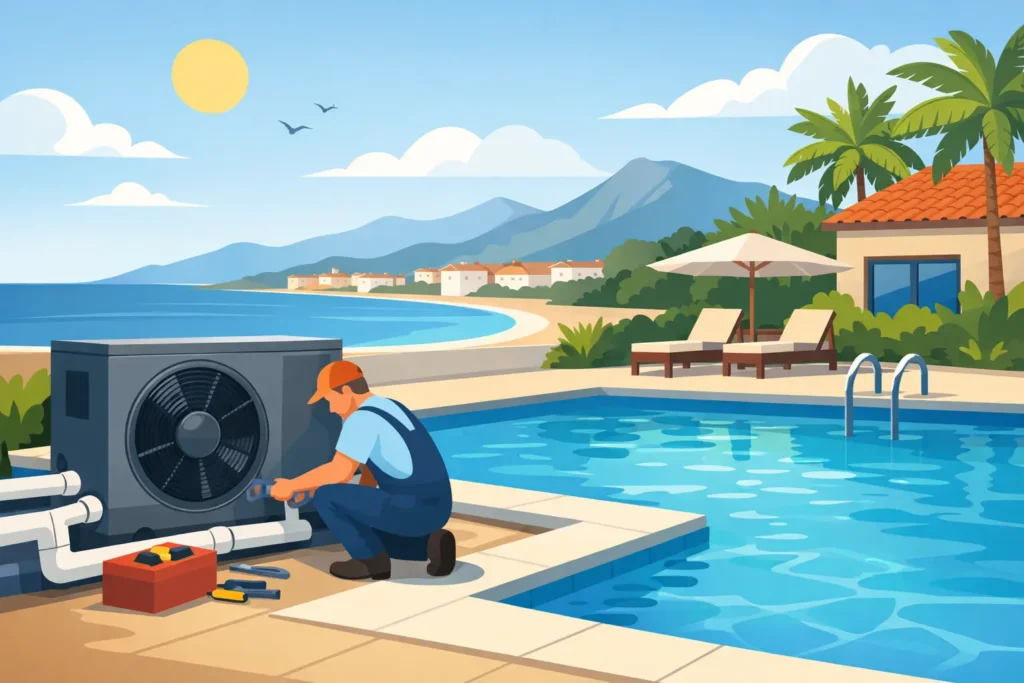
Correct sizing matters. A pool in a sheltered courtyard has very different demands from a larger infinity pool overlooking the coast. Water volume, desired temperature, exposure, cover use and swimming season should all be considered before selecting equipment. Eco Pool Heaters can assess these factors and recommend a Norsup heat pump and cover arrangement suited to the property rather than relying on a one-size-fits-all estimate.
Small habits that protect water and heat
Daily habits have an effect over a full season. Replace the cover as soon as swimming finishes, rather than leaving the pool open while everyone eats or relaxes on the terrace. Run filtration at suitable times for the season and avoid unnecessarily long pump schedules. Keep the cover clean, inspect it for splits, and store it correctly when it is not required.
If automatic top-up equipment is fitted, check it periodically. It is useful for maintaining the correct level, but it can hide a slow leak or make excessive evaporation less obvious. A simple record of water use can reveal changes early, before they become a larger repair or energy bill.
A pool should feel like part of the home, not another utility bill to manage. Retaining the heat and water you have already paid for starts with a cover, but the lasting benefit comes from equipment, settings and care that suit the way your pool is actually used.