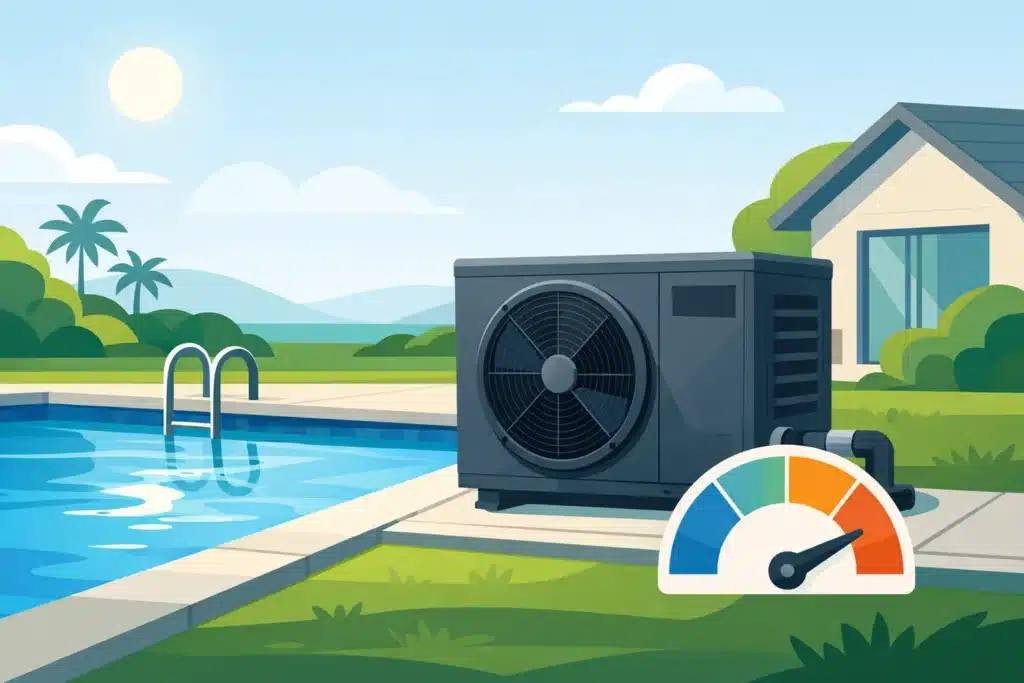
A Costa del Sol pool can look inviting in March, yet still feel too cold for more than a quick dip. The practical way to extend pool swimming season Costa del Sol is not simply to add more heat. It is to manage heat loss, choose equipment suited to your pool and usage, and keep the system working efficiently through the cooler months.
For villa owners, second-home owners and holiday-rental managers, this can turn a pool from a summer-only feature into something the family and guests genuinely use from spring well into autumn. The difference is comfort, but it is also better value from the pool you already own.
Why Costa del Sol pools lose heat so quickly
Costa del Sol sunshine helps, but it does not guarantee warm swimming water. Night-time temperatures can fall sharply in spring and autumn, while wind, evaporation and cool ground temperatures steadily pull warmth from the water. An uncovered pool can lose most of its heat overnight, particularly in exposed coastal locations or inland areas where evenings are cooler.
Evaporation is the main issue. When water evaporates, it takes a surprising amount of heat with it. A pool heater may then spend the following day replacing warmth that was lost overnight, rather than increasing the temperature to a comfortable level.
The pool’s size, depth, finish, surrounding shade and prevailing wind all matter. So does how it is used. A family pool heated for regular afternoon swims has different needs from a rental-property pool expected to be ready for arriving guests, or a large pool used only at weekends. This is why a tailored assessment is more useful than choosing a heater based on a headline output alone.
Extend pool swimming season Costa del Sol with a heat pump
For most residential pools, an electric air-source heat pump is the most efficient route to dependable water temperatures. Rather than creating all its heat directly from electricity, a heat pump draws available warmth from the surrounding air and transfers it into the pool water. In the mild Mediterranean climate, this can provide far more efficient heating than traditional electric resistance heaters.
A properly specified unit allows owners to set a target temperature and maintain it steadily, rather than waiting for a brief warm spell. For many households, water around 27 to 29°C is comfortable for general swimming, although children, older swimmers and guests who prefer relaxed bathing may appreciate a slightly warmer pool.
The right capacity is crucial. An undersized heat pump can run for long periods without reaching the desired temperature when conditions are cooler. An oversized unit may cost more than necessary and can be poorly matched to the existing hydraulic setup. Pool volume is only the starting point. A professional recommendation should account for the pool’s exposure, insulation, cover, season of use, desired temperature and filtration schedule.
Premium Norsup heat pumps are engineered for demanding European pool conditions and are a strong option for Costa del Sol homes. Their performance, quiet operation and long-term reliability make them particularly suitable where owners want efficient heating without compromising the peace and quiet of a terrace or garden. Equipment quality matters, but installation quality matters just as much. Correct pipework, electrical provision, water flow and positioning all affect performance.
Heat pumps work best when they maintain, not rescue
A heat pump is most economical when it holds the pool near a chosen temperature. Trying to raise very cold water quickly after several days without heating requires more energy and more patience. If the pool is used regularly, maintaining the temperature with a cover in place between swims is usually the smarter approach.
This does not mean every pool should run constantly. Owners who use a property intermittently may prefer a schedule around arrival dates, while holiday-rental managers may need a planned handover routine. The best operating pattern depends on occupancy and expectations, which is why local technical advice can avoid expensive guesswork.
A solar cover is not an optional extra
If a heat pump adds warmth, a solar pool cover protects it. The cover floats directly on the water and creates a barrier that greatly reduces evaporation, particularly overnight. It also helps retain heat during breezy conditions and can capture some solar warmth during the day.
For many pools, installing a cover is the single most effective way to reduce heating demand. It also reduces water loss and can limit the amount of debris entering the pool, which means less topping up, less chemical adjustment and less strain on the filtration system.
A cover must be practical enough to use. On a larger pool, a roller makes the difference between a cover that is used every evening and one that remains folded away. Shape, access points, steps and surrounding space should all be considered before choosing the cover and roller arrangement.
There is a trade-off. Solar covers need handling carefully, cleaning periodically and replacing eventually as they age in strong sun. However, compared with the energy lost from an uncovered heated pool, they are normally a worthwhile investment. A good cover also lets the heat pump work fewer hours to achieve the same result.
Get the pool system ready before heating it
Heating water through a tired, poorly maintained circulation system is rarely efficient. Before extending the season, it is sensible to check that the filtration pump is delivering the correct flow, the filter is clean, valves are operating properly and there are no leaks around pipework or equipment.
Water quality also affects comfort and equipment care. Balanced pH and sanitiser levels protect swimmers, prevent cloudy water and reduce the risk of scale forming inside heat-exchange components. Scale, blocked filters and restricted flow can all reduce a heater’s efficiency and, if ignored, may lead to avoidable faults.
For properties left empty for part of the year, regular maintenance offers additional peace of mind. A trained technician can monitor water condition, inspect equipment and identify developing issues before a planned visit or guest arrival is affected. This is especially valuable for owners who are not permanently based in Spain.
Small changes that lower running costs
Once heating and heat retention are in place, a few operating choices can make a noticeable difference. Run filtration during the warmer part of the day where possible, when ambient air gives the heat pump better working conditions. Keep the cover on whenever the pool is not in use, and avoid setting the water temperature higher than your household genuinely needs.
Wind protection can also help. Walls, planting or carefully positioned screening may reduce heat loss in exposed gardens, although airflow around the heat pump itself must never be restricted. The unit needs clear space to operate efficiently and allow straightforward servicing.
It is tempting to focus solely on electricity consumption, but the whole system should be considered. Efficient heating, a fitted cover, correct circulation and routine care work together. Spending on one element while neglecting the rest often limits the result.
Choosing a local installation partner
Pool heating is a long-term addition to your property, not a plug-in appliance. A dependable installer should inspect the pool and equipment area, discuss when and how the pool is used, explain realistic temperature expectations and provide a transparent estimate. They should also be available after installation if settings need adjusting or maintenance is required.
Eco Pool Heaters combines local installation knowledge with premium Norsup equipment, including five years of full cover and ten years on the heat exchanger. That level of warranty support is meaningful only when paired with correct installation and a local team able to provide continuing technical care.
Ask whether the proposed heat pump is matched to your pool rather than simply priced by volume, whether a cover is included in the recommendation, and how the new equipment will work with the current pump, filter and controls. These conversations help ensure the system is designed for dependable everyday use rather than a short-lived improvement.
A well-heated, covered and properly maintained pool changes the rhythm of life at a Costa del Sol home. Instead of waiting for July temperatures, you can plan an April swim, enjoy autumn weekends in the water and welcome guests to a pool that feels as good as it looks.