A pool that needs topping up every few days is not automatically leaking. On the Costa del Sol, strong sun, warm winds and frequent swimming can remove a surprising amount of water through evaporation. But if the level is falling faster than expected, how to detect pool leaks becomes a practical question with real consequences. Left unresolved, a small leak can waste treated water, upset chemical balance, damage surrounding finishes and place extra strain on pumps and heating equipment.
The aim is not to dismantle equipment at the first sign of water loss. It is to separate normal evaporation from a genuine problem, then narrow down whether the issue is in the pool shell, pipework or equipment. A calm, methodical check usually gives a much clearer picture before a repair visit is needed.
Start by ruling out normal evaporation
Evaporation varies considerably between properties. An uncovered pool in an exposed garden will lose more water than one protected by walls, planting or a quality solar cover. High temperatures, low humidity, wind, bather splash-out and water features all increase loss. During a hot spell, a pool may visibly drop without there being a fault.
As a general guide, water loss of a few millimetres per day can be normal in warm weather. A loss approaching or exceeding 5-6 mm daily, particularly when the pool is covered and unused, deserves investigation. Look for patterns rather than relying on one day’s observation. Mark the waterline on the skimmer or tile with a small piece of tape and check it at the same time each day for several days.
A solar cover is useful here for more than heat retention. It significantly reduces evaporation, so persistent water loss under a properly fitted cover is more likely to point towards a leak. It also reduces the energy needed to maintain pool temperature, helping a heat pump work as efficiently as possible.
How to detect pool leaks with the bucket test
The bucket test is the most useful first check for most homeowners and property managers. It compares the pool’s water loss with evaporation from a container of water exposed to the same conditions.
Fill a bucket with pool water and place it on a pool step so the water inside and outside the bucket sit at roughly the same level. Mark both levels clearly. Switch off any automatic top-up system and avoid using the pool for 24 hours. If possible, carry out the test when rain is not forecast.
After 24 hours, compare the marks. If the pool water has fallen by the same amount as the bucket water, evaporation is the likely cause. If the pool has dropped noticeably more, water is escaping somewhere from the pool or its system.
For a more informative result, repeat the test with the circulation pump running as normal, then again with it switched off. Greater loss while the pump runs often suggests a leak on the pressure side of the plumbing, such as a return line, filter connection, heater union or valve. Loss that continues at a similar rate when the system is off may be associated with the pool shell, skimmer, suction pipework or a fitting below the waterline.
This test cannot identify the exact location, but it gives a technician valuable information and prevents unnecessary guesswork.
Read the clues around the pool
A leak rarely announces itself with a dramatic crack or puddle. More often, there are small changes around the pool that become more obvious over time. Check the equipment area, terrace and garden after the system has been running.
Pay attention to these warning signs:
- Damp soil, unusually lush patches of grass or persistent wet areas near buried pipe routes.
- Cracked, sunken or loose coping stones and tiles, especially where movement has appeared recently.
- Air bubbles returning through the inlet jets, a pump that loses prime, or poor circulation.
- A filter pressure reading that changes unexpectedly or equipment that needs topping up to operate correctly.
- White staining, persistent dampness or corrosion around pipe joints, valves, the pump, filter or heater connections.
- A water level that settles at the same point every time, which may indicate a leak at a light, skimmer, return fitting or structural feature at that height.
Do not assume every wet patch is a pipe leak. Backwashing, filter cleaning, condensation around a heat pump and rainwater runoff can all create moisture near the equipment pad. What matters is whether the moisture returns consistently when the pool system is operating.
Check the equipment pad carefully
The equipment area is one of the simplest places to find a fault, and it should be inspected before anyone considers more invasive testing. With the pump running, look closely at unions, valve stems, the pump lid, filter connections and visible pipework. A slow drip can evaporate before forming a puddle, leaving only mineral deposits or staining behind.
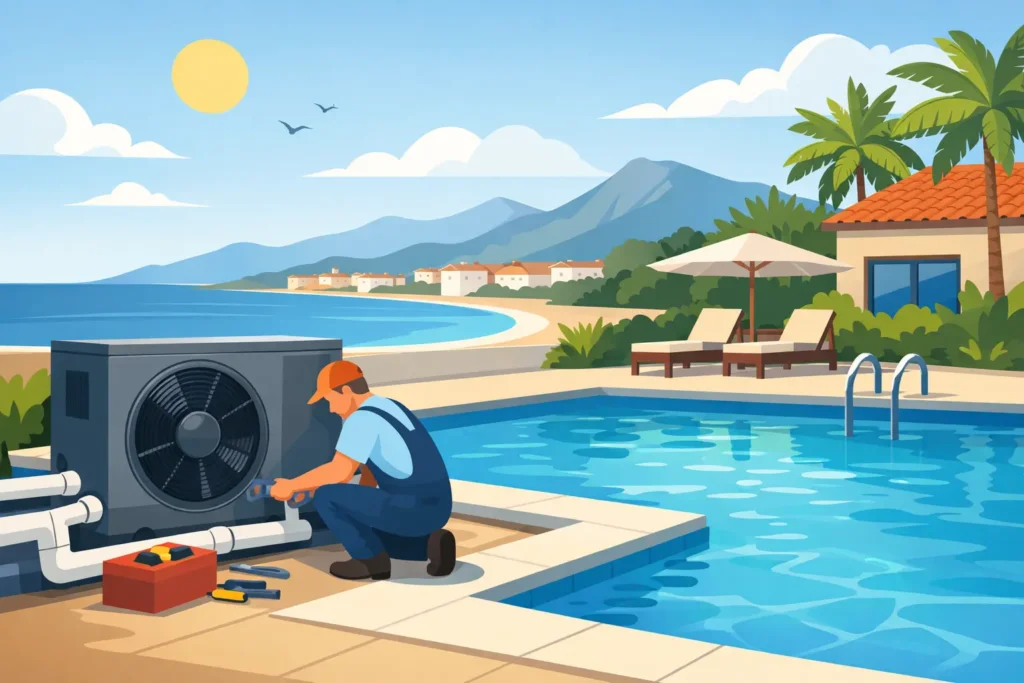
If your pool has a heat pump, inspect the water connections and surrounding pipework, not the unit only. A heat pump produces condensation during normal operation, particularly in humid weather, and this can be mistaken for a leak. Condensation is usually clear, collects beneath the unit and stops when the unit has been off for a while. Water loss from a leaking connection is more likely to continue with circulation, leave deposits around a fitting or be accompanied by a falling pool level.
Never tighten fittings aggressively or attempt to seal pressurised pipework while the system is running. Overtightening can damage threads, O-rings and unions. If a seal is visibly worn or a joint is weeping, switch off the relevant equipment and arrange a proper inspection.
Look at the pool shell and fittings
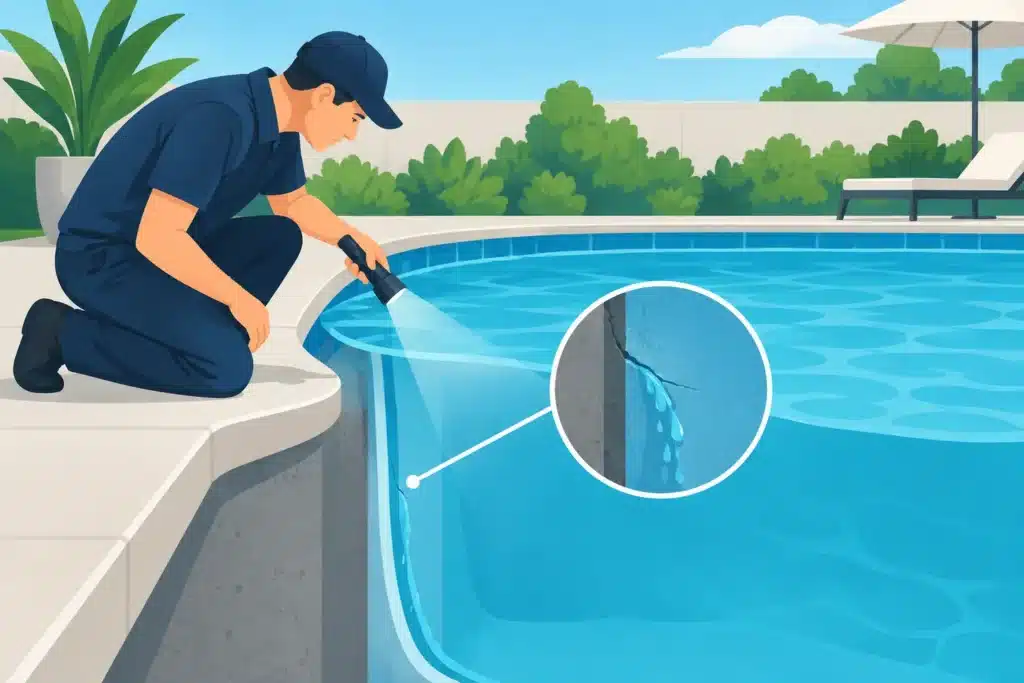
Once equipment leaks have been ruled out, inspect the pool itself methodically. Start at the waterline and work down. Examine skimmer faces, return jets, lights, steps, drains, tile bands and expansion joints. In tiled pools, missing grout may be unsightly without causing meaningful water loss, but open joints around penetrations and fittings can allow water behind finishes.
For plaster, rendered or painted surfaces, fine surface crazing is common and does not always extend through the shell. A crack that is widening, crosses tiles, continues through coping, or is paired with ground movement needs professional assessment. Vinyl liners require a different approach, as even a pinhole can leak steadily while remaining difficult to see.
A simple dye test can sometimes help around a suspected fitting. With the circulation system turned off and the water still, gently release a small amount of pool-safe dye near the area without disturbing the water. If the dye is drawn into a crack or gap, there may be a leak path. This is not a reliable test in moving water, and it should not be used as proof that a structural repair is required.
Why a pool leak should not be ignored
The obvious cost is water, but the secondary effects can be more expensive. Regular refilling dilutes chemicals, so the pool may become harder to balance and use more treatment products. If the level falls below the skimmer, the circulation pump can draw air and risk running dry. In a holiday home, that can happen unnoticed between visits.
Leaks can also undermine the ground around the pool, contribute to movement in paving and create moisture problems in nearby structures. For pools with heating, unnecessary cold-water top-ups mean more energy is needed to restore a comfortable temperature. A solar cover helps reduce evaporation, but it cannot compensate for a leak.
When professional leak detection is the sensible option
Call for professional help if the bucket test indicates excess loss, the water level is dropping quickly, there is visible ground movement, or you suspect a buried pipe. A specialist can isolate sections of pipework, pressure test lines, inspect fittings and use targeted detection methods to locate the fault without treating every possible cause as a major excavation.
This is particularly worthwhile for properties that are rented out, used seasonally or managed from abroad. A prompt diagnosis protects the pool’s appearance, avoids wasted heating and chemical costs, and makes it easier to plan a repair around guest bookings or planned time at the property. Eco Pool Heaters can assess the wider system as well, so an equipment repair is considered alongside circulation, water care and heating performance rather than in isolation.
Keep a short record of water-level changes, pump running times, weather conditions and anything you notice around the equipment area. That small amount of information can turn a vague concern into a quicker, more accurate repair – and help keep the pool ready for the days you actually want to enjoy it.