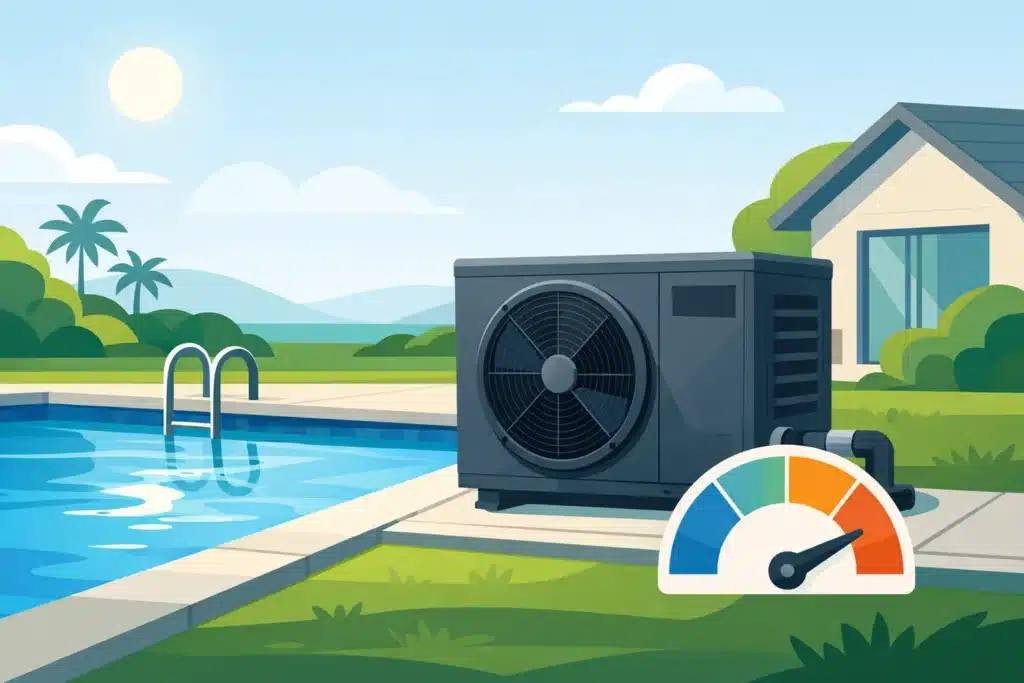
A chilly April morning and a pool that looks inviting but feels too cold to enter is where the pool heat pump versus gas heater decision becomes very real. Both can extend the swimming season on the Costa del Sol, but they do it in very different ways. The right choice depends less on the headline purchase price and more on how often you swim, how quickly you need warmth, your energy supply and how well your pool retains heat overnight.
For most residential pools in southern Spain, a well-sized electric heat pump paired with a solar cover provides the most economical route to regular, comfortable swimming. A gas heater can still be the right answer in specific circumstances, particularly where rapid heat-up is the priority. The detail matters.
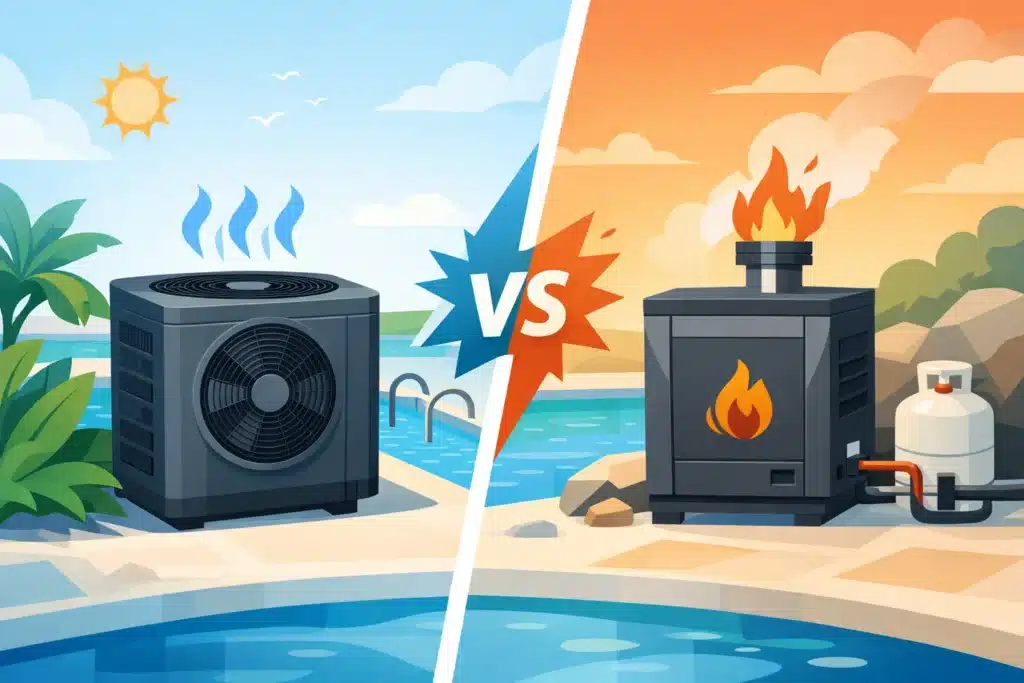
Pool heat pump versus gas heater: the key difference
A gas pool heater creates heat by burning fuel. It is direct, powerful and largely unaffected by the outdoor air temperature. When the system is correctly sized, it can raise water temperature quickly, making it useful for an occasional swim, a last-minute gathering or pools that are not heated consistently.
A pool heat pump works differently. It draws low-grade heat from the outside air and transfers it into the pool water through a heat exchanger. It uses electricity to run the fan and compressor, but it does not generate all of its heat from electricity alone. For every unit of electricity consumed, a quality heat pump can typically deliver several units of heat to the water under suitable conditions.
That distinction drives the biggest practical trade-off. Gas generally wins on speed. Heat pumps generally win on day-to-day economy when used regularly in Costa del Sol conditions.
Running costs: where the long-term difference appears
A heater is not a one-off purchase. It is part of the pool’s ongoing operating cost, so comparing only installation quotes can give a misleading picture.
Gas heaters use either natural gas or LPG, depending on the property. Fuel costs can be substantial when maintaining a pool at temperature for weeks or months. They are often most sensible where heating is occasional and the owner values a fast response more than the lowest running cost.
An electric heat pump takes longer to bring a cold pool up to temperature, but it is designed to maintain a chosen temperature efficiently. The mild climate around Marbella, Estepona, Mijas, Fuengirola and Málaga is particularly favourable for this approach through much of the extended season. As air temperatures rise, the heat pump has more available heat to recover and usually operates more efficiently.
Actual costs always vary. Pool volume, target temperature, wind exposure, shaded locations, filtration hours, electricity tariff and whether the pool is covered all affect the result. A technician should calculate the likely heat loss and select equipment accordingly rather than relying on a generic capacity figure.
The solar cover is not an optional extra
The most efficient heater cannot compensate indefinitely for an uncovered pool losing heat every night. Evaporation is a major source of heat loss, especially on exposed plots or when evening temperatures fall.
A durable solar pool cover helps retain the heat already in the water, reduces evaporation and can reduce the heater’s workload considerably. It also keeps debris out of the pool, which supports easier day-to-day care. For a homeowner wishing to swim from spring into autumn, a heat pump and a properly fitted cover are usually a far stronger combination than either measure alone.
Warm-up time and how you use the pool
If you arrive at a holiday home on Friday and want the water warm by Saturday morning, a gas heater has an obvious advantage. Its output is high and immediate. It can be the practical choice for a pool used infrequently, for short stays, or where a fast temperature increase is required before an event.
A heat pump suits a different routine. It works best when the pool is heated steadily and maintained within a comfortable temperature range. Once the water has reached that range, the pump replaces the heat lost from the pool rather than repeatedly trying to heat a cold body of water from scratch.
This is why usage pattern should lead the decision. A full-time resident swimming several times a week will often benefit from a heat pump’s efficient, consistent operation. A villa owner who visits only a few times each year may place more value on rapid heating, although remote controls and sensible pre-arrival planning can make a heat pump workable for many second homes too.
For holiday-rental properties, the decision is more nuanced. Guests expect water that is ready when they arrive. A correctly specified heat pump, good cover and reliable management routine can meet that expectation economically, but the system must be sized for the property’s booking pattern, not simply the pool’s litres.
Installation, space and practical requirements
A heat pump needs an outdoor position with adequate airflow. It should not be boxed tightly into a plant room or pushed into a narrow enclosed corner, because it needs to draw in and discharge air freely. Good positioning also considers noise, drainage from condensation, pipe run length and access for future servicing.
Modern premium heat pumps are considerably quieter than older equipment, but placement still matters. On compact plots, an installer should consider neighbouring terraces, bedroom windows and the direction in which the fan exhausts cooler air.
Gas heating has its own requirements. The installation may need a suitable gas supply or LPG tank, safe pipework, flue arrangements where applicable and compliance with local regulations. Fuel storage, delivery access and regular safety checks need to be considered from the outset. It is not simply a case of placing a heater beside the pool equipment.
Both systems must integrate properly with the existing circulation pump, filter, bypass plumbing and electrical installation. Ageing equipment can limit performance. In some cases, improving flow, repairing valves or replacing an inefficient circulation pump is part of achieving reliable pool heating.
Reliability, maintenance and lifespan
A well-installed heat pump needs routine attention rather than constant intervention. The evaporator should be kept clear of leaves and dust, water flow should remain correct, and annual checks can identify problems before the heating season starts. The heat exchanger is a particularly important component, especially in pools with salt chlorination or demanding water chemistry.
Gas heaters also need professional servicing and safety checks. Burners, ignition systems, gas connections and combustion-related components require proper inspection. Their simplicity in delivering heat does not remove the need for qualified care.
For either option, poor water balance can shorten component life. Correct pH, sanitiser levels and filtration protect not only the heater but the wider pool system. This is one reason local ongoing support is valuable: heating, water treatment and circulation should be treated as connected parts of the same installation.
Eco Pool Heaters supplies and installs Norsup heat pumps selected for Mediterranean conditions, with five years of full cover and ten years on the heat exchanger. That level of protection is most meaningful when the unit has been properly specified, fitted and maintained from the beginning.
Which heater is better for a Costa del Sol pool?
For a residential pool used regularly across the extended season, an electric heat pump is usually the better long-term choice. It is efficient in the region’s climate, avoids the ongoing logistics of gas fuel and provides steady, dependable temperature control when paired with a solar cover.
A gas heater remains worth considering if you need a rapid warm-up, use the pool only occasionally, or have a specific operating requirement that makes high-output heating more important than low running costs. It is not an inferior solution, just a different tool for a different pattern of use.
The most dependable decision starts with a site assessment. Pool dimensions are only one part of the calculation. Exposure to wind, shade, desired swimming months, cover type, equipment condition and how the property is occupied all shape the right recommendation.
Rather than choosing on the basis of a single cold weekend or a tempting initial price, choose the system that will make the pool easier to enjoy for the way you actually live. A carefully sized heater and a cover you use consistently can turn more ordinary mornings and evenings into proper swimming time.