A pool heater rarely fails at a convenient time. It is usually discovered on the first warm weekend of spring, when the water is still too cold to enjoy, or just before guests arrive at a holiday home. Choosing to replace an old pool heater before it becomes an urgent problem gives you time to select the right system for your pool, your usage and your running costs.
For homeowners and property managers on the Costa del Sol, a modern heat pump can make the pool comfortable across far more of the year. The right replacement is not simply about buying a more powerful unit. It is about matching reliable equipment to the pool’s volume, exposure, plumbing and the way the property is used.
Signs it is time to replace an old pool heater
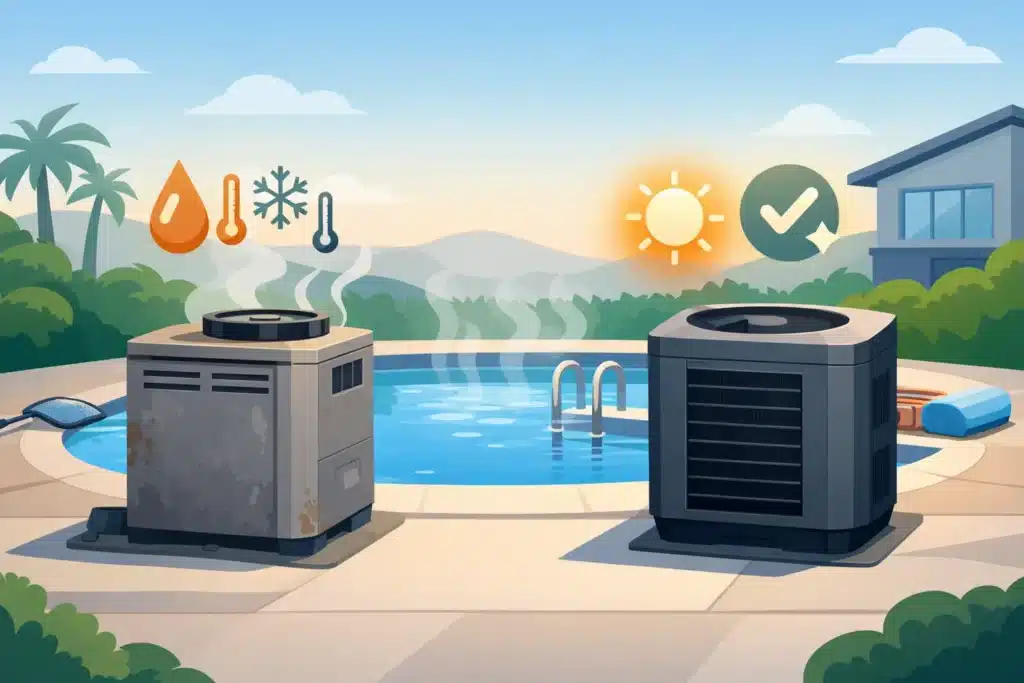
Age alone does not automatically mean a heater needs changing, but older equipment deserves a closer look. If a unit is frequently repaired, struggles to reach its set temperature or makes excessive noise, replacement may be the more sensible long-term decision. Repeated call-outs can soon outweigh the cost of a system that is more efficient and covered by a meaningful warranty.
Performance is often the clearest sign. Perhaps the heater runs for long periods but the water temperature barely moves, or the pool only feels warm during the hottest part of summer. An ageing heat pump may have lost efficiency, while a gas heater can become expensive to operate and require increasingly difficult-to-source parts. Corrosion around the cabinet, damaged fans, persistent error codes and leaks are all reasons to arrange a professional assessment.
It is also worth considering how your needs have changed. A pool that was once used only in July and August may now be part of family life from Easter until late autumn. A villa used for holiday lets may need dependable, predictable heating between guest stays. In both cases, an older heater sized for occasional use may no longer be suitable.
Why a modern heat pump is often the right replacement
For many residential pools, an electric heat pump is the most practical route to efficient, controlled heating. Rather than creating heat directly, it draws energy from the outside air and transfers it into the pool water. In Costa del Sol conditions, where there is generally plenty of mild air through the extended swimming season, this can provide an effective balance of comfort and running cost.
The best model depends on more than the number of litres in the pool. A shaded inland pool near Coín will behave differently from a sunny, sheltered pool in Marbella. Wind exposure, night-time temperatures, the desired water temperature, filtration hours and whether a cover is used all affect the capacity required. Oversizing slightly can be worthwhile where a pool is heavily used or expected to recover temperature quickly, but an unnecessarily large unit is not always the best investment.
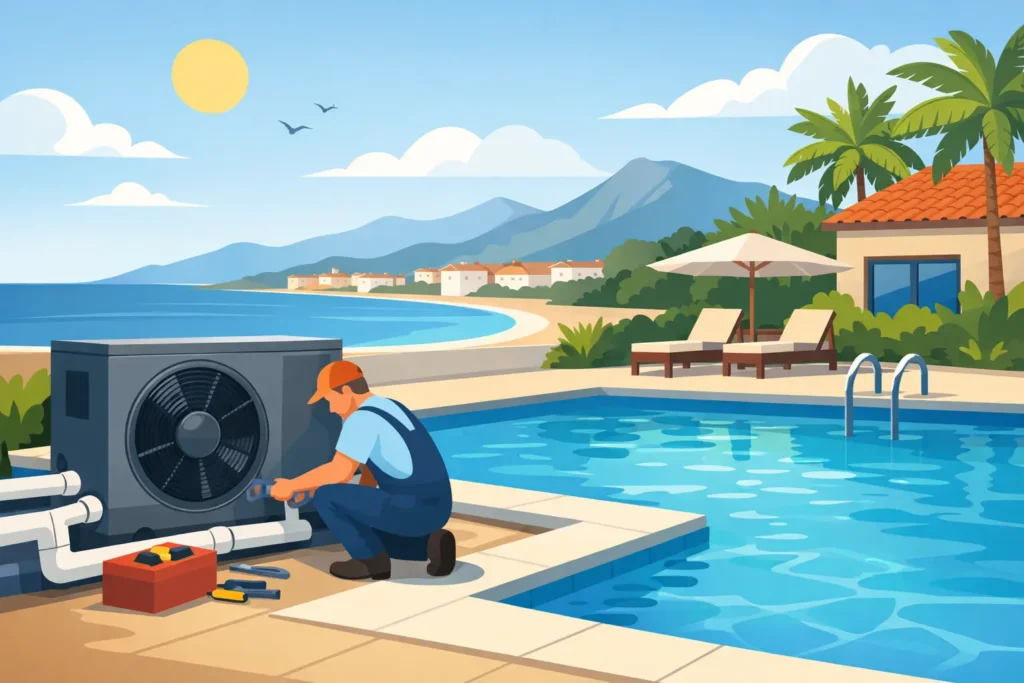
A premium Norsup heat pump is designed for demanding European pool installations and offers quiet, efficient operation when correctly specified and installed. Eco Pool Heaters supplies and fits these systems with five years of full cover and a ten-year heat-exchanger warranty, giving property owners reassurance beyond the day of installation. Warranty is valuable, but correct sizing, plumbing and commissioning are what help a heater deliver the performance it was bought for.
Heat pump replacement versus repair
Repair remains a good option where the fault is straightforward, the unit is relatively young and its efficiency is still acceptable. A failed capacitor, sensor or circulation issue should not automatically lead to replacement. A skilled technician should establish whether the heater itself is at fault before recommending a new unit.
Replacement becomes more attractive when a major component has failed on an older machine, particularly if parts are obsolete or the repair would only postpone another problem. The decision should be based on the expected service life after repair, energy use and the level of reliability required, rather than the repair invoice alone.
What should be checked before installation?
A proper site survey avoids the common problems that make a new heater underperform. The installer should confirm the pool volume and inspect the existing pipework, filter, circulation pump and electrical supply. Water needs to flow through the heat pump at the correct rate, so a tired circulation pump or restricted filter can affect heating results even when the new unit is working perfectly.
The proposed position matters too. A heat pump needs clear airflow and sensible spacing around it, not a cramped corner where discharged cold air is drawn straight back in. It should sit on a stable base with practical drainage and access for servicing. Consider noise as well, particularly at villas with bedrooms, terraces or neighbouring properties close to the equipment area.
For a replacement project, existing pipework can sometimes be reused. In other cases, improving the layout with isolation valves, bypass arrangements or more suitable connections makes future maintenance easier and protects the new equipment. Transparent advice at this stage is far preferable to trying to adapt a modern heater around unsuitable old components.
Electrical requirements must also be assessed properly. A qualified installation considers cable runs, protection and the condition of the existing consumer unit. This is particularly relevant at older properties where pool equipment has been added in stages over many years.
Pair the heater with a solar pool cover
Heating the water is only half the job. Without a cover, a pool loses a substantial amount of warmth overnight and through evaporation, especially when there is a breeze. A quality solar pool cover helps retain the heat your system has produced, reduces evaporation and can make the heater’s work noticeably more efficient.
This is one of the simplest ways to improve the value of a heater replacement. The pool will generally reach temperature more easily, hold it for longer and need less recovery time after cool nights. For second-home owners, a cover also helps reduce water loss and limits the burden on the pool’s chemical balance between visits.
The right cover should be cut and finished for the pool, rather than treated as an afterthought. Shape, steps, storage and day-to-day handling all influence whether it will actually be used. A cover that is awkward to move soon ends up folded beside the pool, which defeats the purpose.
Avoid the false economy of a like-for-like swap
It is tempting to replace a failed heater with the closest equivalent, particularly when guests are due or the pool is part of a rental schedule. However, the old specification may not reflect what the pool needs now. A simple like-for-like replacement can preserve poor airflow, inadequate pipework, an inefficient circulation arrangement or a unit that was undersized from the start.
Equally, the most expensive model is not automatically the correct answer. Pool heating should be planned around realistic expectations. Keeping water at a comfortable temperature through the shoulder months has a different demand from raising a cold pool quickly in winter. A clear discussion about when the pool is used, how warm you want it and whether it is covered leads to a better recommendation and a more predictable electricity bill.
Make replacement a planned upgrade
The most convenient time to replace a heater is before the season, when there is time to assess the complete system rather than react to a breakdown. It also gives you an opportunity to arrange any necessary repairs to valves, filtration equipment or electrics while access is straightforward.
Once fitted, regular maintenance keeps the investment working as intended. Keeping the air path clear, maintaining healthy water chemistry, cleaning filters and checking circulation all support heat-pump performance. For properties managed from abroad or used as holiday rentals, ongoing local support can be just as valuable as the equipment itself.
A well-planned replacement should leave you with more than a new box beside the pool. It should give you a quieter, more dependable way to enjoy warmer water, with practical advice and local help available when your pool needs attention.