A Costa del Sol pool can look effortless from the terrace, but Mediterranean pool care is rarely hands-off. Long sunny spells, warm nights, airborne dust, hard water and periods when a property is empty all place particular demands on the water and equipment. A consistent routine protects the appearance of the pool, keeps swimmers comfortable and avoids the costly surprise of a failed pump or algae bloom just before guests arrive.
For homeowners, second-home owners and property managers, the aim is not to spend every weekend testing equipment. It is to have a sensible maintenance plan, efficient heating and reliable local support when something needs attention. The details will vary with the pool’s size, exposure, bather load and whether it is used year-round, but the principles remain the same.
Mediterranean pool care starts with balanced water
Clear water is not always balanced water. A pool may look inviting while chlorine is being used inefficiently, scale is forming inside pipework or the pH is drifting beyond a comfortable range. In the Costa del Sol, hard water and high evaporation can make these issues more common, particularly through the hotter months.
Regular testing should cover pH, sanitiser level, total alkalinity and stabiliser, with calcium hardness checked as part of a broader maintenance schedule. pH is especially important: when it rises too high, chlorine becomes less effective and scale can develop on tiles, heat exchangers and salt-water equipment. When it falls too low, water can become corrosive and uncomfortable for skin and eyes.
The right chemical programme depends on the pool and its treatment system. A shaded private pool used by two people needs a different approach from a sunny holiday-rental pool with frequent guest changeovers. Adding chemicals by habit, rather than responding to measured results, often creates more work. Accurate testing, correct dosing and occasional shock treatment when conditions call for it are more dependable than reacting only once the water loses its sparkle.
Filtration does the quiet work
The filter and circulation pump are the working heart of the pool. They remove debris before it breaks down, distribute treatment chemicals and help prevent stagnant areas where algae can take hold. In summer, a pool will usually need longer daily filtration than it does in winter, but leaving a pump running continuously is not automatically the best answer.
A well-sized variable-speed pump can often circulate water effectively at a lower speed for longer periods, using less electricity and producing less noise than an older single-speed unit. The correct setting depends on pipework, filter condition and the volume of the pool, so it is worth having the system assessed rather than choosing a timetable by guesswork.
Sand, glass-media and cartridge filters each need routine attention. Pressure readings that rise above the normal operating level can indicate that a backwash, rinse or cartridge clean is due. Ignoring this makes circulation less efficient and adds strain to the pump. At the same time, over-cleaning a sand or glass filter can reduce its effectiveness, so follow the equipment requirements rather than backwashing to a fixed calendar date.
Watch for the early signs of trouble
A pool does not need to turn green before it needs help. Cloudiness, a recurring chlorine smell, weak return jets, air bubbles in the pump basket, unexplained water loss or a pump that sounds louder than usual are all reasons to investigate promptly. A small air leak, blocked skimmer line or failing seal is generally simpler to resolve before it affects circulation or damages another component.
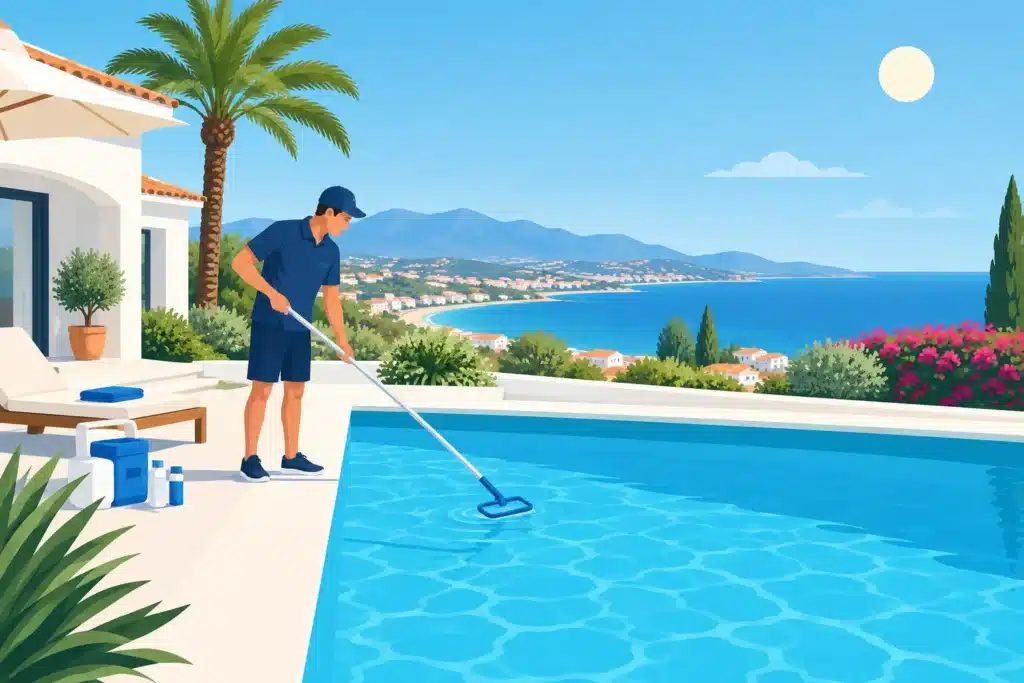
For properties that stand empty for weeks at a time, scheduled visits are particularly valuable. They provide an opportunity to check water chemistry, empty baskets, inspect the equipment pad and identify leaks before they become a larger repair or a water bill problem.
Heat, evaporation and solar covers
Many owners focus on heating first, yet heat retention is just as important. A pool loses a significant amount of warmth through evaporation, especially overnight and during breezy periods. It also loses water and treatment chemicals, increasing the load on the system.
A quality solar pool cover is one of the most practical additions to a Costa del Sol pool. Used consistently when the pool is not in use, it reduces evaporation, helps retain solar gain and allows a heat pump to work more efficiently. It also keeps leaves, dust and insects out of the water, reducing the time spent skimming and filtering.
A cover does involve a small daily habit. It needs to be removed before swimming and stored correctly, ideally on a reel for larger pools. For most owners, that trade-off is worthwhile when the result is warmer water, lower heat loss and less frequent topping-up.
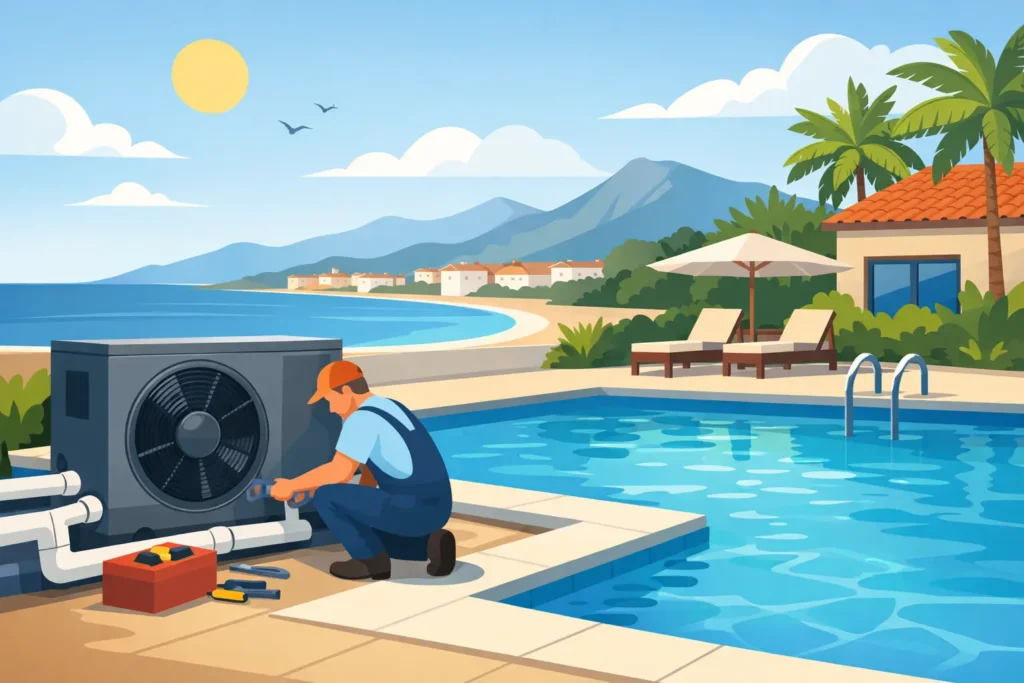
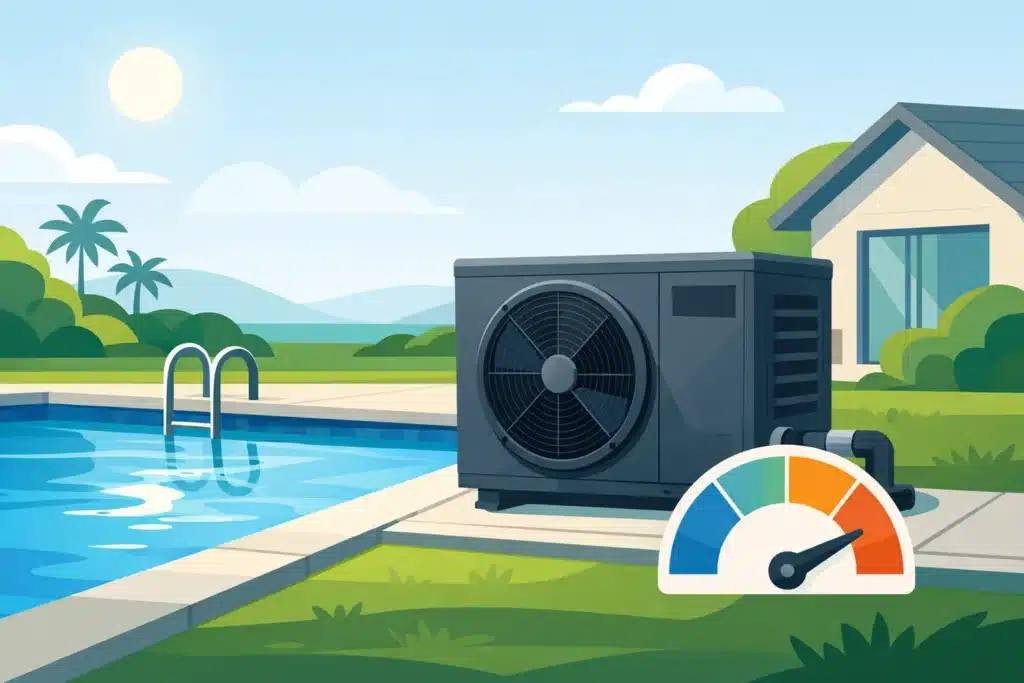
An electric heat pump is often the most efficient way to extend the swimming season, particularly when it is correctly matched to the pool and paired with a cover. Sizing is not simply a matter of choosing the largest unit available. Pool volume, desired temperature, prevailing wind, shade, insulation, usage hours and the months you want to swim all affect the recommendation.
A heat pump that is too small may run for long periods without achieving the desired temperature. An oversized unit can cost more to purchase than necessary. Professional assessment should also consider pipework, electrical supply, location for airflow and whether the existing circulation equipment can support the installation. Eco Pool Heaters installs Norsup heat pumps designed for Mediterranean conditions, with equipment and installation chosen around the individual pool rather than a one-size-fits-all specification.
Seasonal care is different, not optional
The Mediterranean climate allows many pools to stay open for far more of the year than pools in northern Europe. That does not mean winter maintenance can be neglected. Cooler water slows algae growth, but storms, leaves, dust and reduced circulation can still affect water quality.
During winter, filtration hours can often be reduced and heating may be adjusted around actual use. However, the water still needs testing, baskets still need clearing and equipment should still be checked. If a pool is being left unused, speak with a local specialist about a suitable winter programme rather than simply switching everything off.
Spring is the time to prepare for heavier use. Check the filter, inspect seals and valves, clean the cover, test the treatment system and deal with minor repairs before temperatures rise. Summer then becomes much easier to manage, with frequent skimming, sensible filtration, regular testing and cover use doing most of the work.
Protect the equipment behind the pool
Pool equipment is exposed to heat, moisture, insects and, in some coastal locations, salt-laden air. Keeping the plant area tidy and ventilated helps technicians access it safely and makes leaks or unusual noises easier to spot. Electrical connections, timers, heaters and pumps should be protected from direct weather exposure where possible, while still allowing the airflow that heat pumps require.
Do not ignore small leaks around unions, valves or the pump. Apart from wasting water, leaks can draw air into the system and force the pump to work harder. Likewise, do not rely on a temporary repair for a recurring electrical or circulation fault. Reliable operation comes from finding the cause, using suitable parts and testing the system after the work is complete.
Give rental pools a stricter routine
Pools at holiday properties need more frequent checks because bather load changes quickly. Sunscreen, body oils, sand and higher water use all place extra pressure on sanitation and filtration. Between bookings, the pool should be tested, cleaned and checked for proper circulation, not merely given a visual inspection.
This is also where clear service records help. They show what has been tested, what has been added and whether an emerging fault has been observed. For property managers, that consistency supports guest safety, presentation and fewer urgent call-outs.
When professional maintenance is the sensible choice
Homeowners can manage basic tasks such as emptying skimmer baskets, using a cover and reporting unusual changes. But recurring cloudy water, heating faults, electrical issues, significant water loss and ageing equipment call for skilled diagnosis. Trying several chemical products or replacement parts at random can be more expensive than arranging a proper inspection.
A dependable maintenance plan should be tailored to the property, whether the pool is used every day, only during school holidays or mainly by rental guests. Ask for clear recommendations, transparent estimates and an explanation of what is being checked. Good pool care should leave you knowing the system is being looked after, rather than wondering what may fail next.
A well-maintained pool earns its place in the home: warm enough to enjoy, clean enough to welcome family and guests, and efficient enough to run with confidence long after the peak summer months have passed.