A solar cover can keep a surprising amount of warmth in your pool overnight, reduce evaporation and make every hour your heat pump runs work harder for you. But leaves, airborne dust, sunscreen, pollen and chemical residue soon build up on the surface. Knowing how to clean solar covers properly helps protect that investment, keeps the cover looking presentable and prevents unwanted dirt from returning to the pool water.
For pool owners on the Costa del Sol, regular cover care matters even in the warmer months. Saharan dust, strong sunshine and periods when a second home or rental property is unoccupied can quickly turn a clean cover into a source of debris. The good news is that a careful routine is straightforward – provided you use the right products and avoid a few common mistakes.
Why a clean solar cover performs better
A solar cover works by floating on the water and limiting heat loss and evaporation. The air bubbles on the underside create an insulating layer, while the top surface is exposed to the elements. When dirt sits on the cover, it can wash into the pool as you reel it in or out. That adds to the work required from your filtration and water-treatment system.
Grime can also shorten the life of the material. Oils from sun cream, body lotions and airborne pollution may make the cover feel sticky or encourage staining. On a warm, sunny terrace, a dirty cover left folded or rolled up can develop unpleasant odours and, in some cases, mildew.
Cleaning will not make an ageing cover new again. If the bubbles have become brittle, the material is splitting or the cover is losing large areas of its insulating layer, replacement may be more economical. However, sensible care can significantly extend the useful life of a good-quality cover.
What you need before you start
Choose a calm morning or late afternoon if possible. Cleaning a cover in intense midday heat is uncomfortable, and cleaning products can dry too quickly before you have rinsed them away. Keep the pool cover on the water for the initial rinse, as the water supports it and reduces the risk of tearing it while handling.
For routine cleaning, you will need:
- A garden hose with a gentle spray setting
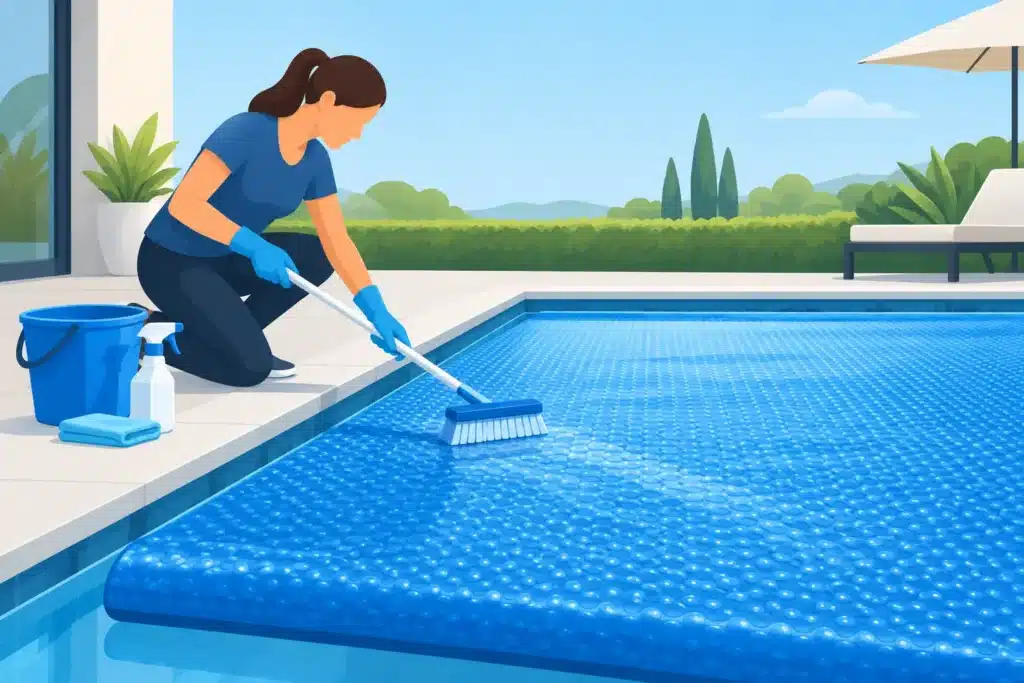
- A soft brush or soft microfibre mop with an extendable pole
- A bucket of warm water
- A mild, non-abrasive detergent suitable for pool-cover material
- A clean cloth or soft sponge for stubborn local marks
Avoid pressure washers, wire brushes, scouring pads and solvent-based cleaners. They can damage the plastic film, flatten or puncture the bubbles, and leave the cover less effective. Household bleach is also best avoided unless a manufacturer specifically confirms that it is safe for your cover. Strong chemicals can weaken the material and may upset your pool water balance when residue returns to the pool.
How to clean solar covers step by step
Remove loose debris first
Before wetting the cover, remove leaves, insects and larger debris with a soft brush, leaf blower on a low setting, or your hands. Do not drag sharp twigs across the surface. If your cover is on a reel, unroll it fully across the pool so you can reach the entire top surface without stretching it.
A quick dry sweep before rinsing is particularly useful after dusty weather. It stops mud forming when water is added and prevents grit being rubbed into the cover during cleaning.
Rinse from one end to the other
Use a hose on a light shower setting and work steadily from the far end towards the edge. The aim is to carry loose dirt off the cover, not force water underneath it. Pay attention to folds, edges and the area closest to the reel, where debris often collects.
If the water level is very low, top it up first or take extra care. A cover needs water beneath it for support. Never stand or kneel on a solar cover, even for a moment, as this can damage both the material and the pool cover reel.
Wash away oils and stuck-on marks
Mix a small amount of mild cleaner with warm water according to the product instructions. Apply it with a soft mop, sponge or brush, using light pressure and short strokes. Work in manageable sections, rather than coating the whole cover and allowing the solution to sit.
Sunscreen residue often appears as dull patches or a greasy film. It may take a second gentle wash, but do not scrub aggressively. If you are unsure whether a cleaning product is suitable, test it first on a small, inconspicuous area. Covers differ in thickness and finish, so manufacturer guidance should always take priority.
Rinse thoroughly
Rinse every cleaned section well. This is the step many owners rush, but detergent left on the cover can become slippery, attract more dirt and enter the pool when the cover is moved. Continue rinsing until the water runs clear and there is no visible foam.
For a cover that has been stored away for winter, rinse both sides if practical. The underside should normally remain clean because it is in contact with treated pool water, but it can still collect residue if the water chemistry has been unbalanced or the cover has been stored damp.
Let it dry before storage
If you are putting the cover away for more than a day or two, allow it to dry as fully as possible before folding or rolling it. A cover can be left flat on the pool while surface moisture dries, or carefully spread out over a clean, smooth area away from sharp edges.
Do not leave it exposed on hot paving for long periods. Direct heat on a dry, uncovered solar blanket can distort the material, especially during a Costa del Sol summer. Once dry, roll it loosely onto its reel or store it in a shaded, ventilated place.
How often should you clean a solar cover?
A light rinse every one to two weeks is usually enough during regular use. A more thorough wash is worthwhile monthly, or sooner after a dust event, heavy leaf fall, building work nearby or a busy week of swimming and sunbathing.
Holiday-rental properties may need more frequent checks, because sunscreen and organic debris can build up quickly between changeovers. If the pool is unused for several weeks, inspect the cover before putting it back into regular service. This small check can avoid a dirty cover undoing the work of an otherwise well-maintained pool.
Protect the cover between cleans
Good pool chemistry makes a real difference. Very high chlorine levels, low pH or poorly managed shock treatments can affect cover materials over time. When a shock dose is needed, it is generally sensible to remove the cover and wait until chlorine returns to a normal bathing range before replacing it. The exact timing depends on your treatment product and pool conditions.
Use the reel whenever possible instead of folding the cover by hand. It reduces creasing, limits contact with rough surfaces and makes it more likely that the cover will be used every evening. A cover stored neatly and shaded from the strongest sun will generally last longer than one left bunched up beside the pool.
It also helps to keep surrounding planting trimmed and clean the pool deck regularly. Less debris near the water means less debris landing on the cover in the first place.
When professional help is worthwhile
Call for advice if your cover has persistent staining, visible mould, widespread bubble loss, torn seams or a reel that is difficult to operate. It may be a cleaning issue, but it could also indicate that the cover has reached the end of its working life or that the reel needs adjustment.
At Eco Pool Heaters, we regularly help homeowners and property managers assess whether a cover can be restored, repaired or should be replaced with a better-fitting option for the pool. The right cover should work with your heating system, fit the pool correctly and remain simple enough to use every day.
A clean cover is one of the easiest ways to protect the warmth you have paid to create. Give it a gentle rinse before dirt becomes a problem, store it carefully, and it will keep doing its quiet but valuable job through more of the swimming season.