A heat pump should make some sound while it is warming your pool, particularly on a cool Costa del Sol morning when it is working hard to raise the water temperature. But a new, louder or irregular pool heater noise deserves attention. Catching the cause early can prevent a minor fitting, fan or water-flow issue from becoming an avoidable repair – and helps keep the pool ready for use when you want it.
The useful question is not simply whether your heater is noisy. It is what the sound is, when it happens, and whether heating performance has changed at the same time. A steady fan sound is very different from a metallic rattle, repeated clicking or a harsh vibration travelling through the pipework.
What normal pool heater noise sounds like
An electric pool heat pump contains a fan and compressor, so complete silence is not realistic. In normal operation, you will usually hear a smooth fan noise and a low, even compressor hum. The sound may increase slightly when the unit starts, when outside temperatures are lower, or when it is operating at a higher output to recover heat after a cool night.
You may also hear water moving through the circulation system. This is often most noticeable at the plant room, especially if the heater shares pipework with the filtration pump. A brief change in sound as the pool pump starts or stops is usually not a concern.
What should prompt a closer look is a sound that is sudden, sharp, repetitive, unusually loud, or accompanied by reduced heating, error messages, water leaks or vibration. Heat pumps are engineered to run efficiently for long periods. They should not sound as though parts are striking the casing or struggling to start.
Common pool heater noises and likely causes
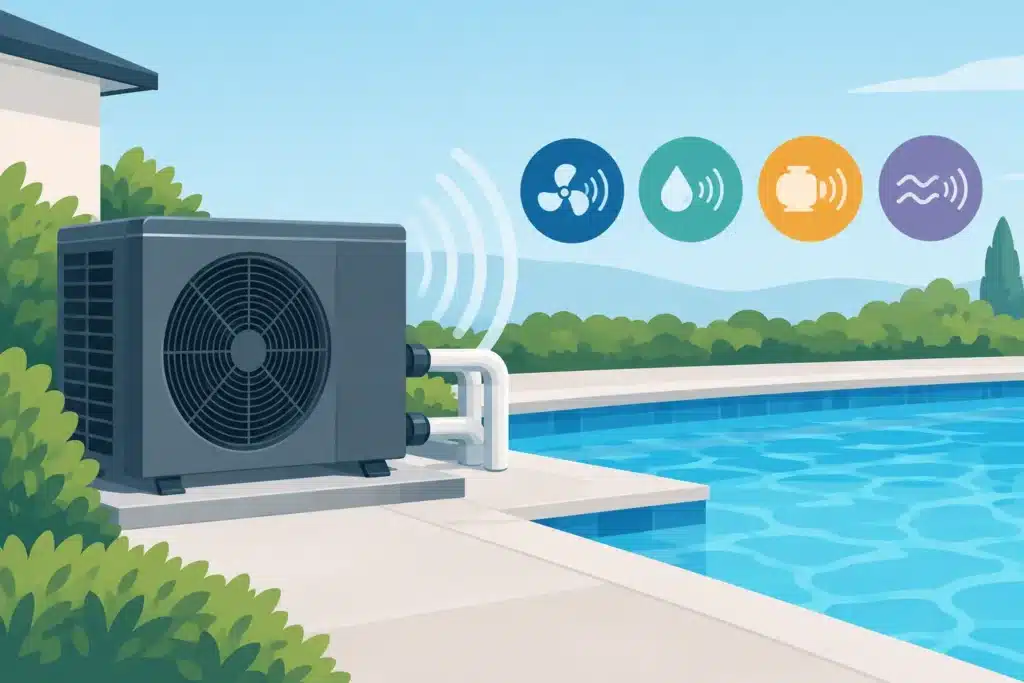
Rattling, buzzing or a vibrating casing
A rattle often comes from something simple: a loose panel, screw, pipe clip or mounting foot. Leaves, small stones and garden debris can also collect around the unit and move in the airflow. On exposed plots, wind can make a loose cover panel seem like an internal mechanical fault.
Vibration is slightly different. It may indicate that the heater is not sitting level on its base, that anti-vibration feet are worn or missing, or that rigid pipework is transmitting movement into a wall or plant-room structure. The heater itself may be working correctly, but the installation can amplify its normal operating sound.
Start by checking the outside of the unit only when it is switched off and isolated. Look for visible debris, loose external fittings and anything resting against the heater. Do not remove electrical covers or attempt to tighten internal components. If the noise continues after obvious external checks, arrange an inspection. A technician can confirm whether the source is the casing, fan assembly, compressor mounts or connected pipework.
A loud fan sound, scraping or tapping
The fan needs clear air around the heat pump to work efficiently. If leaves, seed pods or other debris reach the fan area, they can create a ticking, tapping or scraping noise. A damaged fan blade or fan motor bearing can produce a more persistent rough sound.
Restricted airflow may make the issue worse. Heat pumps need the clearances specified for their location so that they can draw in and discharge air properly. A unit squeezed behind dense planting, boxed into a tight enclosure, or surrounded by stored furniture may become louder and less efficient because it is recirculating cold air.
Never put hands or tools through the fan guard. If there is scraping, switch the heater off and book a qualified pool-equipment technician. Continuing to run a fan that is catching or unbalanced can damage the motor and reduce the heater’s ability to transfer heat.
Humming but the heater will not start
A brief hum at start-up may be normal. A sustained hum with no fan movement, no heat output or repeated failed start attempts is not. The cause could be electrical, such as a capacitor or contactor issue, or mechanical, such as a fan or compressor fault.
This is not a fault to investigate by resetting the unit repeatedly. Turn the heater off, note any fault code on the display and check whether the circulation pump is running as it should. Then seek professional help. Electrical work and refrigerant-system repairs should always be carried out by a suitably qualified technician.
Clicking or repeated switching on and off
A single click as the heat pump starts or stops is common. Repeated clicking, however, can point to a control issue, an electrical component failing to engage, or the heater cycling because a safety condition is not being met.
Poor water flow is a frequent factor. A blocked skimmer basket, dirty filter, partly closed valve or air in the circulation system can prevent the heater receiving the flow it needs. The heat pump may then shut down to protect itself. Check the simple pool-side causes first: water level, baskets, filter condition and valve positions. If water flow appears normal but the clicking persists, it needs diagnosis rather than guesswork.
Gurgling, rushing water or air in the system
Water moving through pipework will always create some background sound, but pronounced gurgling can indicate air in the plumbing or insufficient flow. This can occur after cleaning the filter, changing a basket, topping up the pool or opening and closing valves during maintenance.
Check the pump lid for a visible air pocket and make sure the pool water level is high enough for the skimmer to draw water without pulling in air. If the circulation pump is losing prime, the filter pressure is unusual, or there is a visible leak, switch off the heater until the flow issue is resolved. Running a heat pump without correct circulation can cause it to lock out and may lead to further equipment problems.
A harsh mechanical noise from inside the unit
Grinding, clanking, high-pitched squealing or a heavy knocking sound should be treated as urgent. These noises can indicate a failing motor bearing, compressor mounting problem or internal component fault. Unlike a loose external panel, they rarely improve without professional attention.
Turn the unit off and avoid restarting it until it has been assessed. Note when the noise began, whether it occurs immediately or after several minutes of operation, and whether the pool still heats. That information helps a technician identify the likely cause more quickly.
Why location can make a heater seem louder
Pool heater noise is not only about the heat pump. Hard terraces, boundary walls, covered utility areas and narrow side passages can reflect sound back towards the house or a neighbour’s property. A unit that was barely noticeable in an open garden can sound far louder after a new wall, pergola or storage enclosure is added nearby.
Installation position matters for efficiency as well as comfort. The heat pump needs space for airflow, a stable level base, sensible pipework routing and consideration for bedrooms, terraces and adjoining homes. For holiday-rental properties, this planning is especially valuable: guests want a comfortably warm pool, but they also expect peaceful outdoor areas in the evening.
If the heater is technically sound but its operating noise is intrusive, the right solution may be improved mounting, pipe isolation or a review of airflow and acoustic reflections. Building a solid enclosure around the unit is rarely the answer. It can restrict ventilation, raise operating noise and reduce heating performance unless designed specifically for the equipment.
Preventing avoidable heater noise
Regular care reduces the likelihood of both noise and breakdowns. Keep the area around the heat pump clean and free from leaves, garden waste and stored items. Maintain good circulation by emptying baskets, cleaning the filter as required and keeping water levels correct. It is also worth checking after storms or strong winds, which can shift debris into the fan area or loosen nearby items.
A solar pool cover supports quieter, more efficient operation in a less obvious way. By retaining warmth overnight and reducing evaporation, it lowers the amount of heat the system must replace each day. The heat pump can run in a steadier, more economical pattern instead of working at maximum output to recover lost heat.
Annual servicing is particularly sensible before the main swimming season. A professional visit can check water flow, electrical connections, fan condition, drainage, controls and the general state of the installation. For second-home owners and property managers, planned maintenance also provides reassurance that a small issue is dealt with before guests arrive or the pool is needed.
When to call for help
Arrange a professional inspection if the noise is new, worsening or paired with poor heating, a fault code, water leak, tripped electrics or repeated shutdowns. Switch the heater off immediately if you hear grinding, heavy knocking, burning smells or any sound that suggests the fan is striking something.
Eco Pool Heaters can assess both the unit and the wider pool system, because the source of a heater complaint is sometimes filtration, plumbing, mounting or airflow rather than the heat pump alone. A clear diagnosis protects the equipment, avoids unnecessary replacements and gives you a practical route back to quiet, reliable heating.
A well-installed, well-maintained heat pump should fade into the background while your pool stays comfortable. When it starts demanding your attention, listening early is often the simplest way to protect your swimming season.