A pool can lose more warmth overnight than many owners expect, particularly when the air cools after sunset or a coastal breeze picks up. Well-chosen villa pool covers create a simple barrier between the water and the air, reducing heat loss, evaporation and the amount of debris entering the pool. For Costa del Sol homeowners, that can make the difference between a pool that is occasionally pleasant and one that is genuinely enjoyable for far more of the year.
A cover is not an accessory to fit at the end of a heating project. It is one of the most effective ways to protect the energy already used to warm the water. Whether your villa is occupied year-round, used for holidays or managed as a rental property, the right cover can lower running costs while making day-to-day pool care easier.
Why villa pool covers make a measurable difference
Water naturally evaporates from an uncovered pool. As it does, it takes heat with it. This is often the largest source of heat loss, even in a sunny part of Spain. Wind, cool nights and frequent temperature changes can increase that loss, leaving a heat pump working longer simply to restore the temperature achieved the previous day.
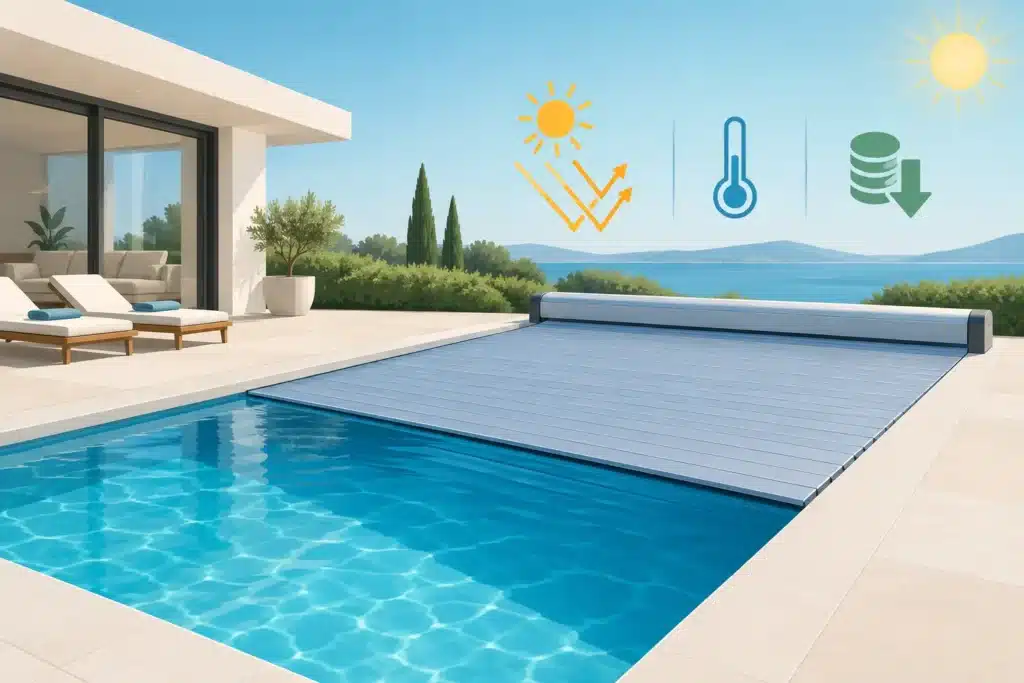
A solar cover reduces evaporation significantly and holds warmth in the pool overnight. During daylight hours, a translucent solar cover can also allow solar energy through to the water. The result is not a substitute for a properly sized heat pump when you want reliable swimming temperatures, but it is a highly effective partner for one.
There are further practical benefits. A covered pool collects fewer leaves, insects and airborne contaminants, so the filtration system and cleaning routine have less to deal with. Chemical consumption may also reduce because there is less evaporation and less debris affecting water balance. For villa owners who are away for periods of time, this can help keep the pool in better condition between service visits.
Choosing villa pool covers for your pool and lifestyle
The best option depends on the pool shape, how often it is used, who will handle it and what you expect from the heating system. A cover that gives excellent thermal performance but is difficult to remove will often be left rolled up. Ease of use matters as much as the material itself.
Solar bubble covers
For many residential pools, a solar bubble cover is the most practical choice. It is lightweight, floats directly on the water and is cut to the pool’s exact shape. The small air cells provide insulation while the material helps capture warmth from sunlight.
This option suits owners looking for an efficient, cost-conscious way to retain heat from a heat pump and reduce evaporation. It is particularly useful for pools used regularly from spring through autumn. A reel makes handling much easier on larger pools, allowing one person to remove and replace the cover without dragging it across the terrace.
Quality varies considerably. A thinner, low-cost cover may be tempting, but intense sun, chlorine and regular handling can shorten its life. A durable cover specified for Mediterranean conditions will usually offer better value over time.
Insulated thermal covers
Where heat retention is the main priority, a heavier insulated cover can be worth considering. These covers are designed to reduce heat loss, especially overnight and during cooler months. They can be a strong choice for owners who keep their pool heated for extended periods or want to start using it earlier in the season.
The trade-off is handling. A thicker cover can be less convenient than a standard solar cover, so the pool layout and available storage space need consideration. For some villas, a suitable reel or motorised handling solution turns an excellent thermal product into an option that will be used consistently.
Automatic covers
Automatic covers offer a premium solution for pools where convenience, appearance and frequent use are all priorities. At the touch of a switch, the cover can be opened or closed quickly, which makes it far more likely that it will be used after every swim.
They require careful planning. The pool structure, surrounding terrace, cover housing and access for future servicing all affect what is possible. Some automatic systems may offer a degree of safety performance, but a thermal cover should never be assumed to be a safety cover. If child safety is a requirement, the cover must be specifically designed, installed and used for that purpose.
Pairing a cover with pool heating
A heat pump warms the water efficiently, but it cannot prevent an uncovered pool from losing heat overnight. Pairing a properly sized heat pump with a solar or thermal cover is usually the most sensible route to a longer swimming season and more predictable electricity use.
The correct specification depends on more than pool volume. Exposure to wind, shade, desired water temperature, whether the property is occupied daily and the time of year you wish to swim all influence the recommendation. A sheltered pool in Marbella may have very different requirements from an exposed inland property near Coín, even where the pools are similar in size.
This is why an on-site assessment is valuable. Eco Pool Heaters can consider the existing equipment, plumbing, electrical supply and practical cover arrangement before recommending a system. The aim is not simply to fit a heater or sell a cover, but to create a setup that works efficiently in normal use.
Getting the fit and installation right
A pool cover should sit neatly across the water without large gaps at the edges. Gaps allow heat and moisture to escape and can make the cover more vulnerable to wind. Accurate measuring is especially relevant for freeform pools, Roman-end pools, steps, ladders, raised features and irregular coping lines.
A professional installation also considers the reel position. It needs enough clear space to operate comfortably without obstructing a walkway, outdoor dining area or access to the pool equipment. On holiday-rental properties, the solution should be simple enough for guests or management staff to use without damaging the cover.
If the pool has sharp-edged fittings, awkward steps or a prominent water feature, a tailored design may be needed. Small details at this stage can prevent frustration later and help the cover last longer.
Simple habits that protect performance
Using the cover whenever the pool is not in use delivers the greatest benefit. It does not need to be treated as a major task: cover the pool in the evening, after a swim and during periods when the property is empty. This reduces the workload on the heating and filtration equipment without affecting enjoyment of the pool.
The cover itself also needs basic care. Keep it clean, roll it onto a suitable reel rather than folding it roughly, and avoid leaving it exposed on hot paving for long periods. Check periodically for brittle sections, split seams or damaged straps. A cover that is becoming opaque, fragile or difficult to handle may no longer be delivering the performance you expect.
Water chemistry remains relevant too. Excessive chemical levels can shorten the life of any cover. Regular testing and balanced treatment protect the pool, the cover and the wider equipment installation.
When replacement is the better option
Most covers gradually degrade under sunshine, heat and chemical exposure. If yours tears repeatedly, traps little warmth, sheds air cells or has become difficult to manage, repairs may only delay replacement. An ageing cover can also leave the heat pump running longer, eroding the savings it was intended to support.
Replacement is a useful point to reassess the whole system. You may have changed how the property is used, upgraded the heating or started renting the villa more frequently. A cover that was suitable several years ago may no longer be the best fit for your needs.
A pool should be ready when you are, not only at the height of summer. The right cover, correctly fitted and used as part of a well-maintained heating system, helps keep the water warmer, cleaner and more inviting each time you step outside.