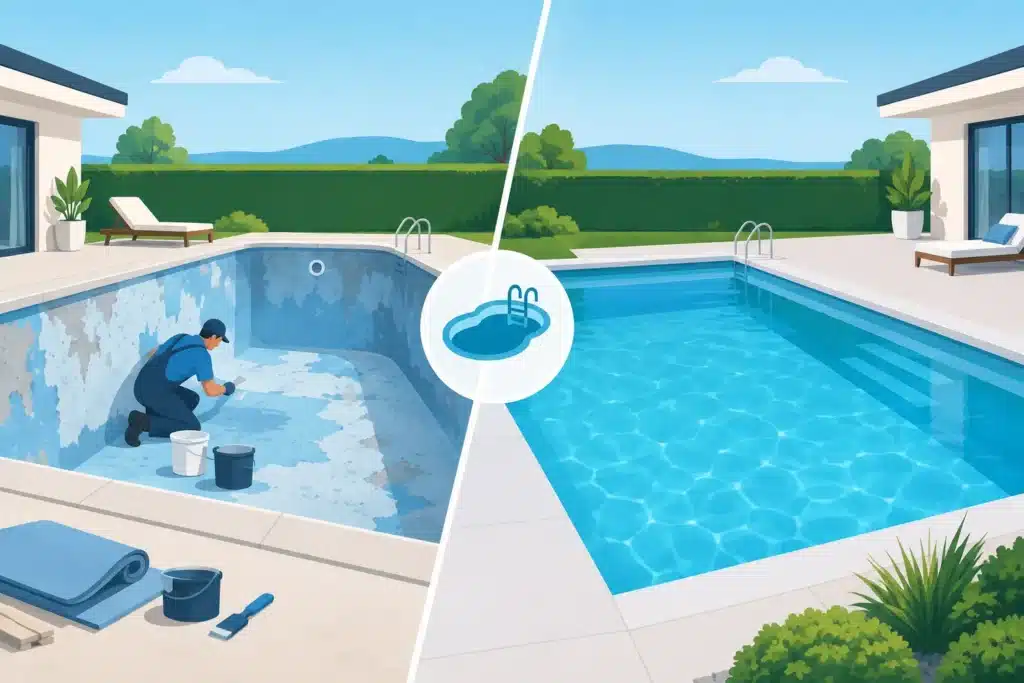
A cracked surround, stained finish or unreliable equipment can make an otherwise beautiful Costa del Sol pool feel like a constant concern. The choice between refurbishment versus pool replacement is not simply about making it look better. It affects how reliably the pool runs, how much it costs to maintain and heat, and whether it remains an asset to your home or rental property for years to come.
For many homeowners, refurbishment is the sensible route. For others, repeated repairs are only postponing a larger problem. The right decision comes from understanding the condition of the pool structure, the age of its systems and how you want to use the pool from now on.
Refurbishment versus pool replacement: the real difference
Pool refurbishment means renewing or upgrading parts of an existing pool while retaining its main structure. This could involve replacing tired tiles, coping stones, liner or interior finish, repairing pipework, renewing the filtration system, fitting modern lighting, or improving access and safety features. It can also be the ideal moment to add a heat pump and solar cover, turning a pool used only in high summer into one that is comfortable for far more of the year.
Pool replacement is more substantial. It may mean removing and rebuilding a failed shell, constructing a new pool in a different shape or position, or replacing an old installation whose structure and services no longer justify further investment. This route creates more design freedom, but it also involves greater disruption, cost and planning.
Neither option is automatically better. A well-built pool with a dated finish often has plenty of life left. Conversely, a pool that looks acceptable on the surface may have serious leaks, widespread structural movement or obsolete pipework beneath it.
When refurbishment is usually the best value
Refurbishment often gives the strongest return when the shell is sound and the core layout still suits the property. A pool can look dramatically different after new finishes, updated coping and carefully chosen lighting, without the cost and upheaval of excavation.
It is particularly worthwhile where the problems are localised. A leaking skimmer, failed pump, damaged tiles or worn surface does not necessarily mean the pool needs rebuilding. Skilled diagnosis matters here. Repairing the visible fault without checking the wider system can lead to the same issue returning a season or two later.
Equipment upgrades can make a major practical difference too. Older single-speed pumps and inefficient heaters may consume more electricity than necessary, while poor circulation can make water care harder than it should be. Replacing ageing equipment during a renovation allows the system to be sized around the pool, its exposure, and whether it is used by a family, holiday guests or occasional visitors.
For owners who want a longer swimming season, heating should be considered as part of the refurbishment rather than an afterthought. An efficient heat pump paired with a properly fitted solar cover reduces heat loss overnight and limits evaporation. That means the heating system does not have to work as hard to maintain a comfortable temperature.
Signs your pool is a good refurbishment candidate
A refurbishment is generally appropriate if the pool holds water, the shell has no significant structural cracking, and its dimensions and position still work well. Cosmetic wear, outdated styling, tired equipment and manageable plumbing faults can normally be addressed without starting again.
It can also be the right choice for a second home or rental property where predictable maintenance and a presentable appearance matter more than creating a completely new design. A carefully planned renovation can improve guest appeal while avoiding an extended period when the pool is unusable.
When replacing the pool makes more sense
Replacement becomes more compelling when there are major structural or design limitations. Persistent water loss with no clear repair route, extensive cracking, a failing shell, serious ground movement or pipework that is inaccessible and repeatedly problematic can make piecemeal repairs poor value.
An old pool may also be in the wrong place for how the property is now used. Perhaps it receives little sun, sits too far from the terrace, has an awkward depth profile, or takes up space better used for outdoor dining and entertaining. Rebuilding provides an opportunity to correct these issues rather than working around them.
Safety and compliance can influence the decision as well. Very old pools may have difficult access, unsuitable drainage, worn electrical installations or layouts that are impractical for young children, older family members or rental guests. In these cases, replacement can offer a cleaner long-term solution.
That said, a full replacement should not be chosen solely because a pool looks dated. Excavation, removal, rebuilding and landscaping can quickly expand the project scope. There may also be access constraints for machinery, particularly at hillside villas or established properties with mature gardens. A transparent assessment of the site helps avoid surprises once work begins.
Look beyond the visible finish
The most expensive pool problems are often hidden. Before deciding, it is sensible to assess the structure, pipework, filtration, electrics, circulation and drainage as a whole. A surface can be renewed beautifully, but it will not solve a pressure leak, undersized filtration or a failing pump room.
Ask whether repairs have become more frequent, whether water chemistry is harder to control, and whether the pool loses water beyond normal evaporation. Consider the running costs too. If the pool is expensive to operate and still cannot be enjoyed comfortably outside peak summer, modernising the equipment may be more valuable than changing the finish alone.
For property managers, downtime is another cost. A pool that repeatedly needs urgent attention can affect guest experience, reviews and bookings. A planned refurbishment during the quieter months is often easier to manage than dealing with avoidable failures during the summer season.
Plan the project around how you will use the pool
The best renovation decisions begin with everyday use, not a catalogue of features. A family that swims at weekends has different needs from a villa that welcomes guests throughout the year. A shaded inland pool may need a different heating approach from a sunny coastal pool exposed to wind.
Think about the temperature you would genuinely like to maintain, the months you want to swim, and how often the pool is covered. These details determine the right heating capacity and cover specification. An oversized or poorly matched system wastes money; an undersized one can struggle when you need it most.
It is also worth allowing for future maintenance. Accessible valves, sensible pipework routes, quality components and adequate space around equipment make servicing easier and reduce disruption later. This is where tailored technical advice is more useful than a one-size-fits-all package.
Eco Pool Heaters can assess both the condition of the existing installation and the practical upgrades that will make the pool easier and more economical to run, from equipment repairs through to energy-efficient heating and durable solar covers.
Budgeting without false economy
A refurbishment budget should include the work behind the scenes, not just the finish you can see. If filtration or pipework is nearing the end of its useful life, dealing with it while the surrounding areas are open can be more cost-effective than returning to the same areas later.
Replacement has a higher initial cost, but may offer better long-term value when the existing pool has deep-rooted defects. The key is comparing realistic whole-life costs: likely repairs, energy use, maintenance, disruption and expected lifespan. The cheapest quotation can become costly if it omits essential preparation, system compatibility checks or proper commissioning.
A detailed, transparent estimate should explain what is being repaired or renewed, which equipment is included, how access affects the work, and what support is available afterwards. Warranties matter, but so does having a capable local team available when a question or fault arises.
Choose the decision that gives you confidence
If the structure is sound and the pool still fits your home, refurbishment can deliver a striking improvement with less disruption and a more controlled budget. If the shell, layout or hidden infrastructure is fundamentally failing, replacement may protect you from years of repeated expense.
The useful next step is not to guess from the surface. Arrange a proper inspection, be clear about how you want to use the pool, and choose the route that leaves you with a pool you can enjoy rather than one you have to keep worrying about.