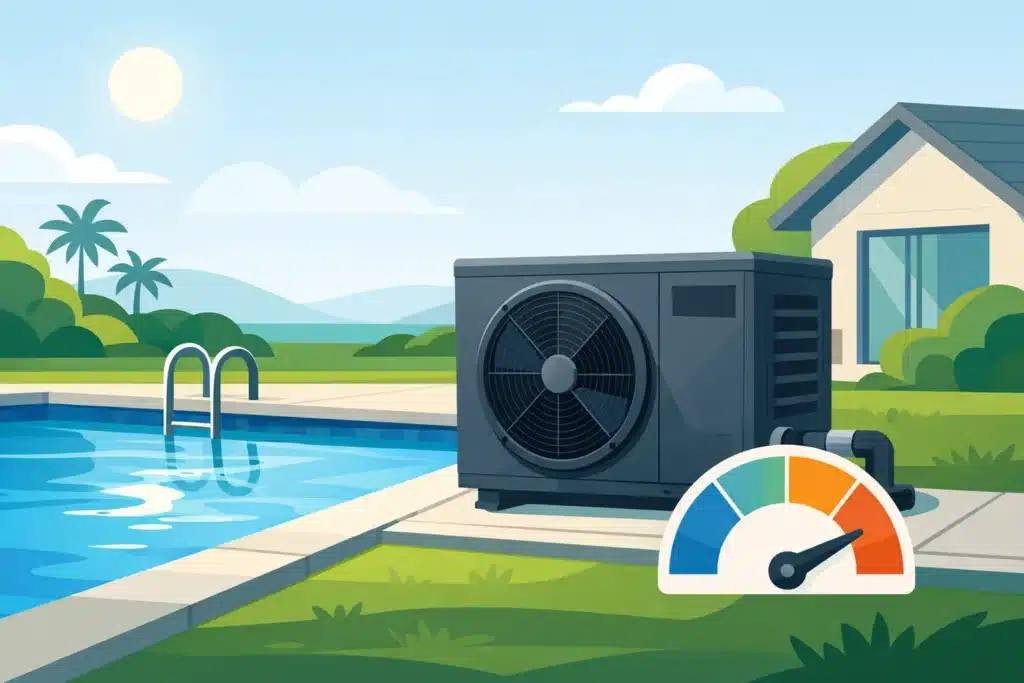
A pool that takes days to reach temperature, runs noisily through the night or trips its electrics is not simply inconvenient. It can turn a Costa del Sol pool from a year-round asset into something used only for the hottest weeks. Regular pool heat pump servicing helps prevent those problems, protecting both swimming comfort and the equipment that delivers it.
For homeowners, villa owners and property managers, the value is straightforward: a properly maintained heat pump uses less energy to do its job, is less likely to fail when guests arrive, and has a better chance of delivering its expected working life. The key is not waiting for a complete breakdown before asking a technician to inspect it.
Why pool heat pumps need professional attention
A heat pump works hard in conditions that can be surprisingly demanding. It draws warmth from the outside air and transfers it into pool water, relying on steady water flow, clean air circulation, sound electrical connections and a correctly operating refrigeration system. A fault in any one of those areas can reduce performance.
On the Costa del Sol, heat pumps also contend with long operating seasons, airborne dust, garden debris, salt-laden air in coastal locations and periods when a second home may sit unused. None of these automatically causes a failure, but together they make routine checks worthwhile.
The symptoms are often gradual. You may notice that the pool is no longer reaching its set temperature, that heating takes longer than it did last season, or that the unit seems to run continuously. Sometimes the issue is as simple as restricted water flow or a dirty evaporator coil. In other cases, it may involve a sensor, fan, capacitor, circulation pump or electrical connection. A professional inspection identifies the cause before guesswork leads to unnecessary expense.
What pool heat pump servicing should include
A proper service is more than switching the unit on and confirming that it produces warm water. The technician should assess how the heat pump performs as part of the whole pool system, because heating efficiency depends on water treatment, filtration, circulation and heat retention as well as the heat pump itself.
Checking water flow and filtration
A heat pump needs the right volume of water moving through it. A blocked skimmer basket, dirty filter, partially closed valve or tired circulation pump can restrict flow and trigger error codes, poor heating or repeated stop-start operation.
During a service visit, the circulation route should be checked for restrictions and the plumbing connections inspected for leaks. The technician can also confirm that the bypass arrangement is correctly set. A bypass that has been altered without understanding its purpose may send too little or too much water through the heat pump, affecting performance.
Inspecting the unit and electrical components
The cabinet, fan, evaporator coil, pipework and condensate drain all deserve attention. Leaves, dust and debris can limit airflow through the coil, forcing the unit to work harder. The area around the heat pump should remain clear too, so it can draw in and discharge air without restriction.
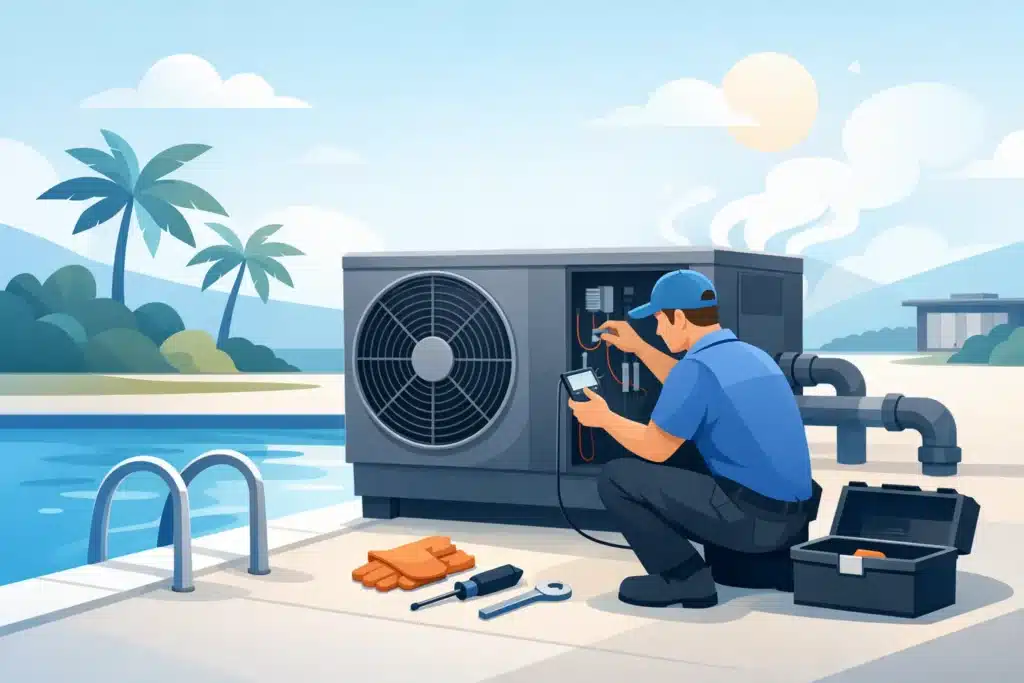
Electrical checks are equally important. Secure connections, correct voltage and the condition of protective devices all contribute to reliable operation. These checks should be carried out by a qualified professional, particularly where water, outdoor electrics and high-value equipment are involved. Attempting internal repairs yourself can create a safety risk and may affect warranty cover.
Testing heating performance and controls
The service should include a practical performance test. This means checking the water temperature, reviewing the set point, confirming normal operating behaviour and investigating any displayed fault codes. It may also involve assessing whether the unit is appropriately sized for the pool, particularly if the pool has been renovated, its usage has changed or a cover is no longer being used.
A heat pump cannot perform efficiently if it is being asked to overcome constant overnight heat loss. For many pools, a quality solar cover makes a significant difference by retaining warmth and reducing evaporation. It is often the most sensible companion to a heat pump, especially for owners who want lower running costs without compromising comfort.
When should you book a service?
For most residential pools, an annual professional service is a sensible starting point. Booking before the main swimming season gives time to address any issues before the pool is needed regularly. In the Costa del Sol, that often means arranging an inspection in late winter or early spring, rather than waiting until the first warm spell.
Some properties benefit from more frequent attention. Holiday rentals, busy family pools and pools heated for extended periods place greater demand on equipment. Coastal homes may also require closer inspection because salt air can accelerate corrosion on external components and fixings.
You should arrange a visit sooner if the heat pump is making unusual noises, displaying repeated error codes, leaking, icing excessively, failing to start or taking much longer to heat the water. A higher electricity bill without a clear explanation can also be a warning sign. Continuing to run a struggling unit can turn a minor repair into a more costly one.
Small habits that support efficient heating
Between professional visits, a few simple routines can help keep the system in good condition. Keep baskets and filters clean, maintain balanced pool water, and ensure the unit has clear airflow around it. Do not stack furniture, plant pots or stored items near the air intake or fan outlet.
Use a solar cover whenever the pool is not in use, particularly overnight. Heat loss through evaporation is substantial, and the cover reduces the work required from the heat pump the following day. This is especially valuable in spring and autumn, when evenings are cooler but many owners still want comfortable swimming temperatures.
It is also worth checking the control settings after power cuts, maintenance work or prolonged periods away from the property. An incorrect timer or unrealistic temperature setting can make a perfectly healthy heat pump appear inefficient. If you manage a holiday home remotely, a local maintenance plan provides reassurance that the pool and its equipment are being monitored properly.
Repair or replacement: making the right call
Not every fault means a new heat pump is required. Many issues can be repaired economically when identified early, particularly problems involving flow, controls, electrical components or general wear. A technician should explain the diagnosis clearly, outline the options and provide a transparent estimate before work begins.
Replacement may be the better decision when an older unit has become unreliable, uses disproportionate electricity or needs a major repair that offers limited long-term value. Modern inverter heat pumps can adjust their output more precisely, helping them operate quietly and efficiently across changing weather conditions. The right choice depends on pool volume, exposure, desired season length, existing circulation equipment and whether a cover is used.
Eco Pool Heaters approaches this as a system decision rather than a one-size-fits-all product sale. For properties across the Costa del Sol, a tailored recommendation can combine a suitable Norsup heat pump, correct installation, a solar cover and ongoing care to provide dependable warmth with realistic running costs.
Protecting performance for the long term
A heat pump is an investment in more enjoyable days by the pool, whether you live at the property year-round, visit for holidays or welcome paying guests. Servicing protects that investment by catching small problems early and making sure the heating system is not wasting energy through avoidable faults or heat loss.
If your pool is slower to warm than usual, the equipment has not been checked since last season, or you simply want confidence before regular swimming begins, booking a professional inspection is a practical next step. A well-maintained heat pump should quietly do its job in the background, leaving you to enjoy a pool that is ready when you are.