A pool that needs topping up every few days can quietly become an expensive problem. On the Costa del Sol, heat, wind and regular use all increase normal evaporation, so it is easy to assume a falling water level is nothing to worry about. Effective pool leak detection separates ordinary water loss from a fault that could damage equipment, waste treated water and undermine the pool structure.
For homeowners, villa owners and holiday-rental managers, the priority is not simply finding where the water has gone. It is identifying the cause early, arranging the right repair and returning the pool to reliable operation with minimal disruption.
When is pool water loss normal?
Evaporation is part of pool ownership, particularly through warmer months. A heated pool can also lose more water because of the temperature difference between the water and the surrounding air. Splashing, backwashing the filter and an automatic top-up system can further hide how much water is genuinely being lost.
As a broad guide, a pool may lose a few millimetres of water each day in hot or windy weather. The figure changes with the pool’s exposure, water temperature, bather use and whether it is covered. An uncovered pool on an exposed hillside near Mijas will behave differently from a sheltered courtyard pool in Marbella.
A solar pool cover is one of the most practical ways to reduce evaporation while retaining warmth. But when water loss remains noticeable with the cover in place, or the pool requires frequent refilling in mild weather, it is sensible to investigate rather than keep adding water.
Signs that pool leak detection is needed
A persistent drop in the water level is the clearest warning, but leaks are not always obvious. Some occur only when the circulation system is running, while others sit in pipework below ground or around fittings behind the pool shell.
Look out for a combination of the following signs:
- The water level falls faster than expected, even when the pool is covered and unused.
- Damp ground, unusually green patches or soft areas appear around the pool, plant room or pipe routes.
- Air bubbles return through the pool inlets, the pump loses prime, or the filter pressure changes unexpectedly.
- Cracks, loose tiles, deteriorating sealant or a falling water level that stops at one particular point become visible.
A pool losing water to a leak also loses chemicals and heat. That means more topping up, more balancing and potentially higher running costs for the heating system. If a heat pump is working hard to maintain temperature while fresh, cooler water is continually entering the pool, efficiency suffers.
The first checks you can make
Before assuming the worst, a few straightforward observations help establish whether the loss is likely to be evaporation or a leak. Do not attempt electrical or pressurised plumbing work yourself, but monitoring the pool over a day or two gives a technician useful information.
The simplest comparison is a bucket test. Fill a bucket with pool water and place it on a pool step so the water inside the bucket is close to the same level as the pool water outside. Mark both levels, then leave the pool undisturbed for 24 hours with the circulation system off. If the pool level falls significantly more than the bucket level, water is likely escaping from the pool rather than evaporating.
Repeat the test with the pump running. Greater loss while the system operates can point towards circulation pipework, valves, the pump, the filter or heater connections. Greater loss with the system off may indicate the pool shell, skimmers, lights, returns or other fittings.
These are indicators, not a diagnosis. A pool can have more than one issue, and an automatic fill device can disguise the scale of the loss. It is also wise to check the equipment area for drips, wet unions and water beneath the pump or filter before booking a visit.
How professional pool leak detection works
A proper investigation begins with the pool’s behaviour. A skilled technician will ask how quickly the level drops, whether it changes when equipment runs, when the issue began and whether recent work has been carried out. They will then inspect the pool, plant room and accessible pipework systematically.
Visible causes are often found around skimmers, return fittings, pool lights, step joints, overflow channels, valves and equipment seals. These areas can be affected by age, movement, sun exposure and previous repairs. A small failed seal can cause a surprisingly large amount of water loss over time.
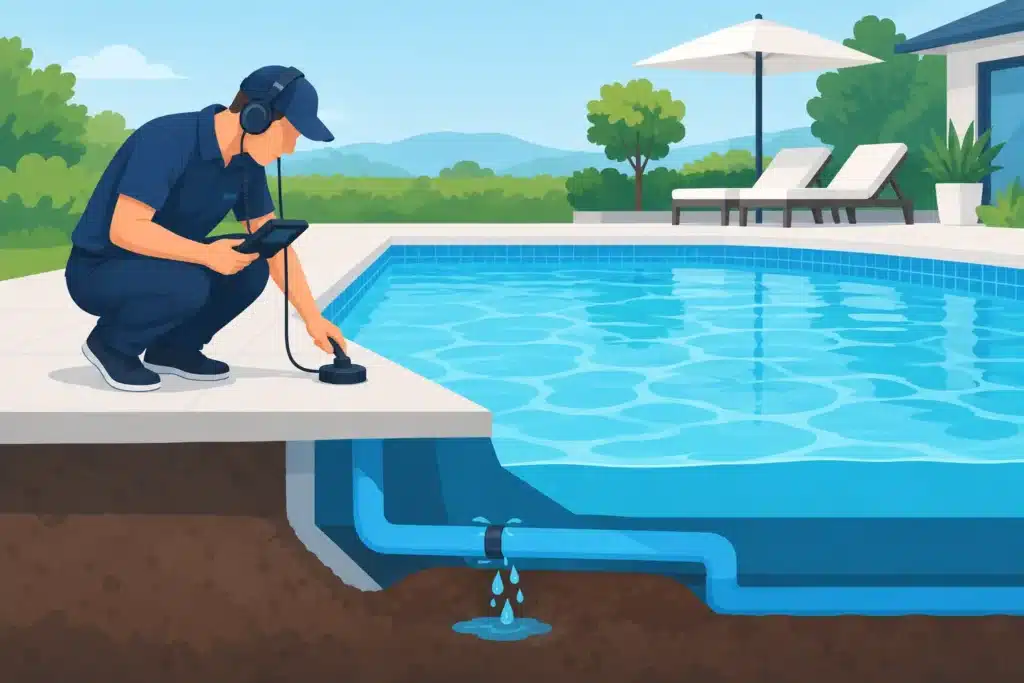
Where the source is not immediately visible, the next step may involve isolating sections of plumbing and pressure-testing lines. This helps establish whether a pipe is holding pressure or losing it underground. Dye testing can reveal water being drawn through a crack or fitting gap, while specialist listening equipment may be used to locate a concealed pipe leak more accurately.
The right method depends on the construction of the pool and its equipment layout. There is little value in lifting paving or opening a wall before tests point to a likely area. Careful diagnosis protects the property as well as the repair budget.
Common causes around pool equipment
The plant room deserves close attention because it contains many connections that work under pressure. Pump lids and O-rings, filter multiport valves, unions, chlorinator cells, heater bypasses and drain plugs can all develop leaks. Some are obvious when the system is operating; others only seep slowly and evaporate before a puddle forms.
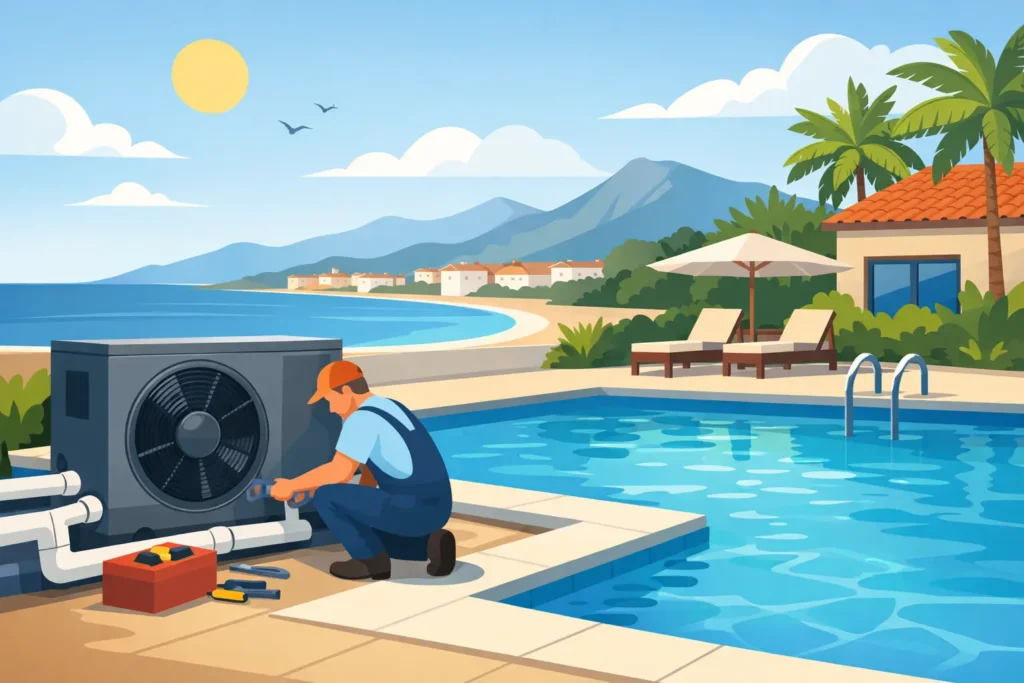
Heating installations need particular care. A heat pump should have correctly sized pipework, secure connections and suitable flow through the unit. A leak at a heater connection may appear minor, yet it can introduce air into the system, reduce flow and affect heating performance. Any repair should confirm that the system is watertight and that the heater is operating at the correct flow rate afterwards.
For pools with older equipment, a leak investigation can also reveal components nearing the end of their useful life. Replacing a failed seal may be the right immediate fix. In other cases, a cracked valve body, corroded connection or tired pump may make a more considered upgrade better value over the long term. A clear estimate should distinguish essential repair work from optional improvements.
Why quick action saves more than water
Constantly adding water changes the pool’s chemical balance. Depending on the source water, it may introduce minerals or affect pH and alkalinity, increasing the attention required to keep the water clear and comfortable. For holiday properties, that can become a recurring maintenance issue between guest stays.
A concealed leak can create wider problems. Water escaping near the pool may wash out bedding beneath paving, saturate soil, affect retaining walls or find its way into an equipment room. Not every leak causes structural damage, but delay increases the uncertainty and can make a small repair more involved.
There is an environmental cost as well. Treated water, electricity used for pumping and heating, and pool chemicals should not be wasted. Finding the fault promptly is a practical way to protect both running costs and the resource you are maintaining.
Choosing the right local support
A dependable pool service should not guess at a leak or offer a one-size-fits-all repair. Ask whether the inspection will include the pool shell, fittings, equipment and circulation lines as appropriate, and whether the proposed repair is based on confirmed findings. You should also receive clear advice on access, expected disruption and any follow-up checks needed once the work is complete.
For second-home owners and property managers, communication matters just as much as the technical work. Photographs, plain-language findings and transparent estimates make it easier to approve repairs from a distance and keep a property ready for owners or guests.
Eco Pool Heaters provides practical support for residential pools across the Costa del Sol, including equipment repairs, maintenance and tailored advice where a leak may be affecting circulation or heating performance. A well-maintained pool system makes faults easier to spot early and helps every component work as intended.
If your water level is falling faster than the weather can explain, do not let repeated top-ups become the solution. A measured inspection can turn an uncertain problem into a clear repair plan, leaving you with a pool that is ready to use, easier to manage and less likely to surprise you later.