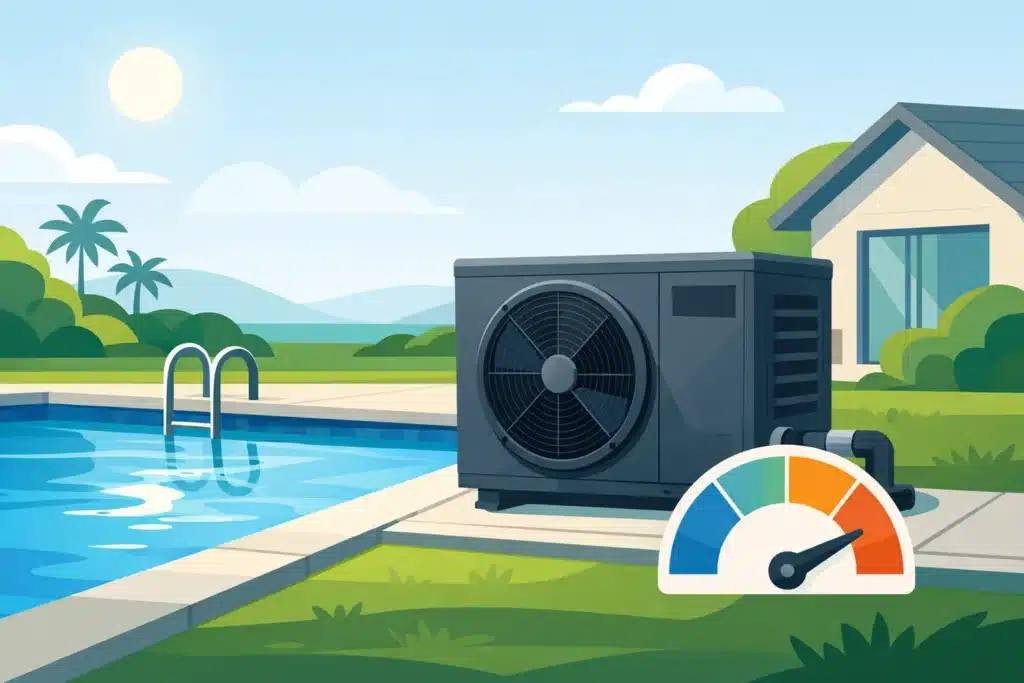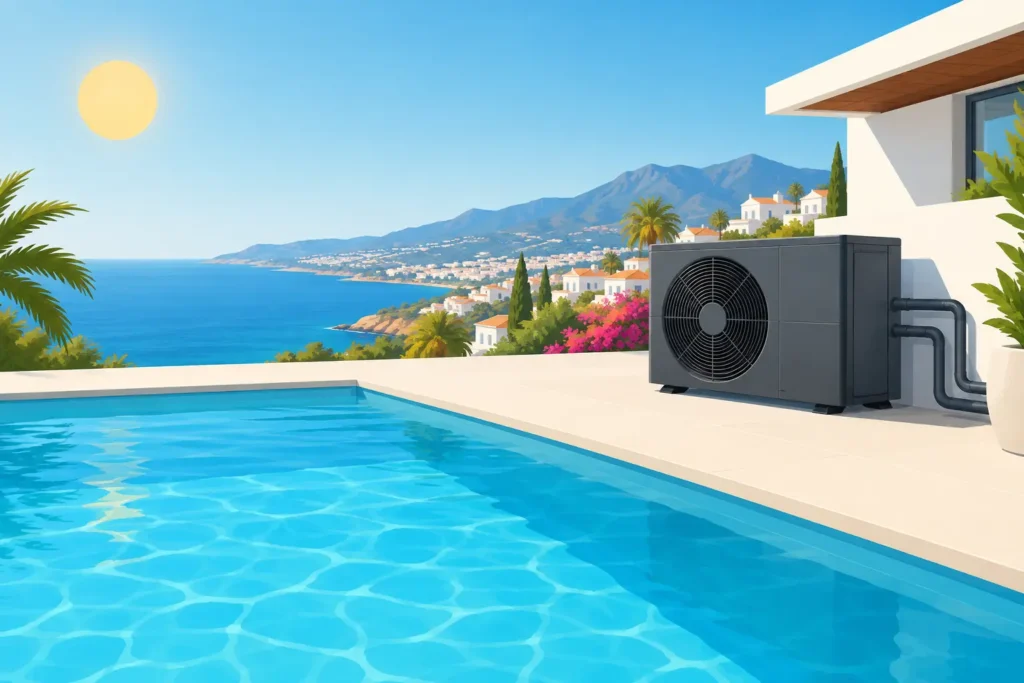
A pool can look inviting in April or October, yet still be too cold for anyone to use. Effective pool heating changes that. For homeowners, villa owners and holiday-rental managers on the Costa del Sol, it can turn a pool from a summer-only feature into a comfortable part of everyday life for far more of the year.
The right system is not simply the most powerful heater available. It must suit the pool’s volume, exposure, intended temperature, bathing habits and existing equipment. A well-specified heat pump paired with a quality solar cover is often the most efficient and dependable answer for Mediterranean pools.
Why pool heating needs a tailored approach
The Costa del Sol has generous sunshine, but warm air does not automatically mean warm pool water. A pool loses heat overnight, through evaporation, during cooler spells and when wind moves across the surface. This is particularly noticeable in spring and autumn, when daytime temperatures can feel pleasant but the water remains reluctant.
Pool size is the starting point, although it is not the whole calculation. A sheltered 30 m³ pool used at weekends has different demands from a larger, exposed infinity pool at a holiday villa with regular guests. The desired water temperature matters too. Raising water by a few degrees and maintaining it steadily is much more economical than repeatedly trying to recover heat from a cold start.
The condition of the wider installation also deserves attention. Pipework, circulation, filtration times, electrical supply and the available space around the equipment all affect performance. A proper site assessment prevents the common frustration of fitting a heater that is either undersized for the job or needlessly expensive to run.
How heat-pump pool heating works
An electric pool heat pump takes warmth from the outside air and transfers it into the pool water. It does not create every unit of heat directly from electricity in the way a conventional electric resistance heater does. That is why a modern heat pump can deliver considerably more heat energy than the electrical energy it consumes, particularly in the mild conditions typical of southern Spain.
In practical terms, the pump works alongside the pool’s circulation system. Water passes through the unit, is gently warmed and returns to the pool. Once the chosen temperature is reached, the system modulates or cycles as needed to maintain it.
This makes heat pumps a strong fit for owners who want reliable, controlled warmth rather than a short burst of heat on the occasional sunny day. They are especially effective when the pool is covered whenever it is not in use.
There is still a trade-off to consider. Every heat pump works harder when the air temperature drops, the pool is uncovered or the target water temperature is set too high. Realistic expectations and correct sizing matter far more than impressive headline figures. A reputable installer should explain likely performance for your pool, not promise identical running costs for every property.
Choosing capacity for your pool
A heat pump must have sufficient capacity to warm the water within a sensible period and hold the temperature under normal conditions. Selecting on pool volume alone can lead to disappointing results. Exposure to wind, shade from buildings or trees, surface area, whether the pool is indoors or outdoors, and how early in the season you wish to swim all influence the recommendation.
For example, a family living at their property year-round may prefer a system designed for longer-season use and stable water temperatures. A second-home owner might prioritise remote-friendly control and efficient recovery before visits. A rental property may need a solution that is simple for guests and resilient under frequent use.
Premium Norsup heat pumps are engineered for European conditions and offer a dependable option where quiet operation, efficiency and long-term support are priorities. At Eco Pool Heaters, installations are matched to the property rather than treated as a one-size-fits-all purchase.
The solar cover is not an optional extra
A solar pool cover has one of the biggest effects on heat retention. Most heat escapes from the water surface, largely through evaporation. Covering the pool when it is not being used reduces that loss, helping the heat pump maintain temperature with less effort.
It also provides useful secondary benefits. Less evaporation means fewer top-ups, less heat loss and often a reduced need for chemical replacement. The cover helps keep leaves, dust and airborne debris out of the water, which can make routine cleaning and filtration easier.
A cover will not replace a heat pump when you want consistent, controllable swimming temperatures, especially outside high summer. It does, however, make any pool heating system work more efficiently. For many Costa del Sol pools, the heat pump and cover should be planned as one solution rather than two separate purchases.
The right cover depends on the pool shape, access and how often it will be handled. A cover that is difficult to remove is less likely to be used consistently. For larger pools, a reel can make daily operation far more practical. Bespoke advice is worthwhile because usability is what turns an efficiency measure into a genuine saving.
Running costs: what really makes the difference
It is sensible to ask about electricity costs before investing in pool heating, but there is no honest single figure for every home. Energy use depends on electricity tariff, weather, pool size, insulation, wind exposure, the temperature you choose and whether the pool is covered.
The strongest cost control comes from good system design and everyday habits. Maintaining a moderate temperature is generally more efficient than allowing the pool to cool significantly between uses. Running the heat pump during warmer daytime conditions can help, while a solar cover should be on whenever the pool is unattended.
Filtration settings should also work with the heating system. Insufficient circulation can limit heat transfer; unnecessarily long filtration periods can add avoidable electricity use. A technician can review the balance between water quality, heating requirements and efficient pump operation.
If an older heater is struggling, noisy or regularly failing, replacement can be more economical than repeated repairs. The comparison should include reliability, warranty protection, expected efficiency and the cost of disruption, not just the initial equipment price.
Installation and aftercare protect your investment
A heat pump is only as good as its installation. Correct water flow, safe electrical connection, suitable drainage, airflow clearance and tidy pipework all affect how well the equipment operates. It should be installed where it can draw and discharge air freely, while remaining accessible for servicing.
Professional installation also gives you a clear handover. You should know how to set the desired temperature, when to use the cover, what normal operation sounds like and who to call if something does not appear right. This is particularly valuable for owners who spend part of the year away from the Costa del Sol.
Ongoing pool care supports heating performance. Clean filters, balanced water chemistry and properly functioning circulation equipment help the system run as intended. A blocked filter or failing circulation pump can leave a heat pump working inefficiently and can create problems that are mistaken for a heater fault.
Warranty should be considered carefully, too. Strong cover provides reassurance, but local technical support matters when you need help quickly. Premium equipment backed by skilled technicians is a better long-term proposition than a cheaper unit with uncertain installation standards or limited support.
When is the best time to install pool heating?
Autumn and winter are often sensible times to plan an installation. There is time to assess the pool, select equipment and complete the work before the spring rush. It also means the system can be tested and ready when you want to start using the pool again.
That said, installation can be worthwhile at any point in the year. A pool that has become too cold to enjoy in early spring, or a rental property preparing for a longer booking season, may benefit immediately. The main consideration is allowing enough time for a proper assessment rather than choosing equipment in haste.
A warm pool should feel uncomplicated: set the temperature, use the cover and enjoy the water when it suits your household or guests. With a correctly sized heat pump, a durable solar cover and dependable local aftercare, that comfort can become part of your property rather than a brief summer luxury.