A pool can look inviting from the terrace while a small equipment fault is quietly increasing running costs in the plant room. That is why pool maintenance Marbella homeowners can rely on is not simply about adding chemicals or skimming leaves. It is regular, practical care that protects water quality, keeps equipment working efficiently and helps ensure the pool is ready when you, your family or your guests want to use it.
Marbella’s climate makes outdoor living easier for much of the year, but it is demanding on pools. Long sunny periods, warm water, dust, wind-blown debris, heavy seasonal use and periods when second homes are empty all affect how a pool should be managed. A reliable maintenance plan responds to those local conditions rather than following the same routine every week regardless of what is happening in the pool.
Why regular pool care saves more than it costs
Clear water is the visible result of good maintenance, but it is only part of the picture. Water that is out of balance can irritate skin and eyes, allow algae to take hold and place unnecessary strain on liners, grout, metal fittings and pool equipment. Left for too long, a minor issue can become a recovery job involving extra chemicals, labour and sometimes replacement parts.
The filtration system deserves the same attention as the water. Pumps, filters, valves, chlorinators and heaters work together, and one underperforming component can affect the whole system. A blocked basket, a dirty filter or a small leak may reduce circulation and make a heat pump work harder than it should. Maintaining the system properly supports lower energy use as well as cleaner water.
For holiday-rental properties, this reliability is especially valuable. Guests expect a pool to be clean, safe and usable on arrival. A planned service schedule reduces the risk of last-minute call-outs, disappointing stays and the pressure of trying to arrange access while managing a property from abroad.
What professional pool maintenance in Marbella should cover
The exact programme depends on the pool, but a proper visit should involve more than a quick visual check. The technician should assess the water, inspect the equipment and deal with early signs of trouble before they become expensive.
Water testing and balancing
Pool water needs to be tested for sanitiser levels, pH and alkalinity, with other readings checked where needed. These figures work together. For example, adding chlorine without correcting an unsuitable pH level may not deliver effective sanitation. Hard water can also create scale, while poor balance can cause corrosion over time.
In the Costa del Sol heat, chlorine is used up more quickly and algae can develop rapidly when circulation or sanitation drops. Testing allows chemical treatment to be adjusted to the season, bather load and weather, rather than guessed. The goal is stable, comfortable water, not a strong chemical smell.
Cleaning, circulation and filtration
Surface debris, dust and sunscreen residues are part of everyday pool use. Regular brushing, vacuuming and emptying of skimmer and pump baskets help prevent these materials from settling or restricting water flow. Tile lines should also be cleaned before oils and deposits build into a stubborn mark.
Filters need periodic cleaning or backwashing according to their type and condition. Doing this too rarely restricts flow; doing it unnecessarily can waste water and disturb the filter bed. An experienced technician can judge the right interval from pressure, circulation and the pool’s usage.
Equipment inspections and early repairs
A maintenance visit is an opportunity to check for leaks, unusual pump noise, worn seals, poor pressure, damaged pipework and electrical concerns. Timely repairs often cost far less than waiting for a complete failure, particularly during peak summer when equipment is working hardest.
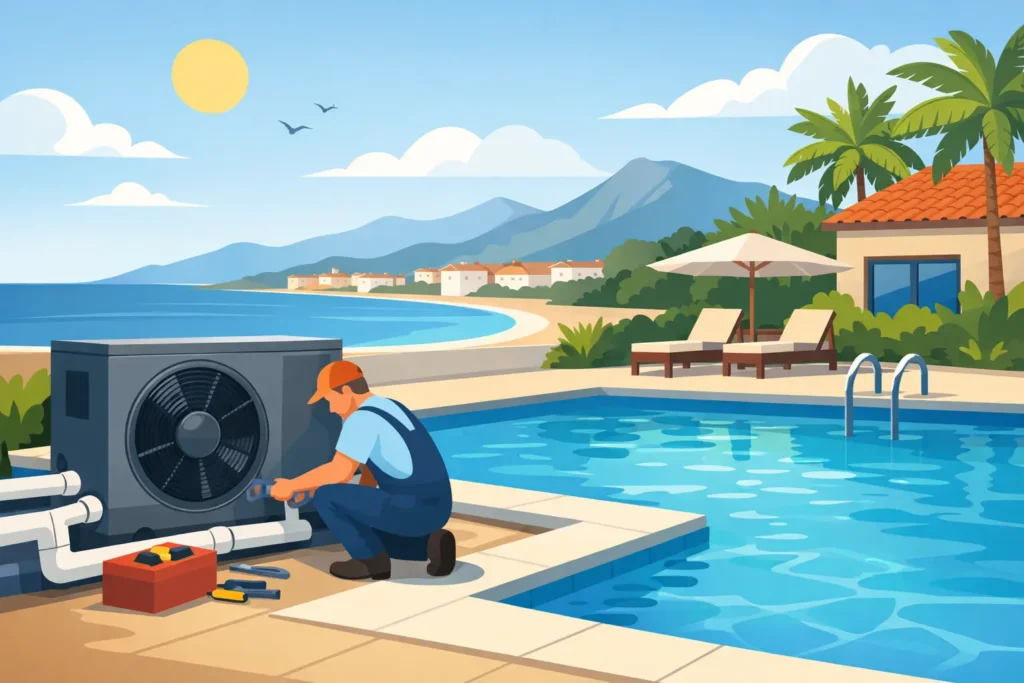
If the pool has a heat pump, its airflow, condensate drainage, settings and connections should be inspected as part of ongoing care. A heater does not need to run constantly to be effective. Correct sizing, sensible temperature settings and sound circulation make a significant difference to comfort and operating costs.
Adjust the routine to the season and how the property is used
There is no single maintenance frequency that suits every Marbella pool. A full-time family home with frequent swimming, trees nearby and a heated pool may need more regular attention than a covered second home used only at weekends. Rental pools usually benefit from a tighter programme in the high season, particularly around guest changeovers.
Summer is the period for close water monitoring, debris removal and checks on filtration run times. Hot weather, high bather numbers and long daylight hours increase the risk of algae and rapidly changing water chemistry. If the water begins to look dull, do not wait until the next planned visit – prompt treatment is easier and less disruptive.
During cooler months, the pool still requires care. Reducing filtration hours may be appropriate, but switching the system off for an extended period is rarely the best answer. Stagnant water allows problems to develop unnoticed, and an unused pool can be more difficult to recover before spring. A lighter winter schedule keeps the water under control and helps identify equipment issues before the swimming season returns.
Heating and covers make maintenance more efficient
A heated pool can extend the months when swimming feels genuinely comfortable, but heating should be considered alongside heat retention. Without a cover, much of the heat added to the water is lost through evaporation, particularly overnight. The pool then needs more energy to reach the desired temperature again.
A well-fitted solar cover helps retain warmth, reduce evaporation and keep airborne debris out of the pool. It also reduces the amount of top-up water required, which matters in a warm climate where evaporation can be substantial. Covers are not a substitute for cleaning or chemical treatment, but they make those jobs easier by reducing the demands placed on the pool.
For owners replacing older equipment, a modern electric heat pump can offer an efficient route to a longer swimming season when matched correctly to the pool size, exposure, desired temperature and usage pattern. The least expensive unit is not always the lowest-cost choice over time. Capacity, installation quality, warranty cover and local support all matter when the equipment is expected to serve the property for years.
Eco Pool Heaters can assess these details as part of a complete maintenance and equipment plan, giving owners clear recommendations rather than a one-size-fits-all solution.
Signs your pool needs attention sooner
Some problems should not wait for the next routine service. Contact a qualified pool technician if you notice any of the following:
- Cloudy, green or persistently foaming water, even after routine treatment.
- A sudden fall in water level that cannot be explained by evaporation or splash-out.
- Reduced return flow, high filter pressure or a pump that sounds louder than usual.
- A heater that trips, displays an error code or no longer reaches the expected temperature.
- Cracked fittings, wet areas around the equipment or visible damage to pipework.
These symptoms do not always mean a major repair is needed. A blocked filter, an air leak or an incorrect valve position can sometimes be the cause. The important point is to identify it promptly, before equipment strain or water-quality problems spread.
Choosing a service partner for a Marbella property
For homeowners and property managers, the real value of a maintenance provider is dependable oversight. You should know what is being checked, what work has been completed and what has been recommended for the future. Transparent estimates are particularly important where a repair or upgrade is required, so there are no surprises after work has begun.
Local knowledge also counts. A technician familiar with Costa del Sol properties understands common challenges such as hard water, summer heat, seasonal occupancy and equipment exposed to coastal air. They can advise whether a repair remains sensible, whether an upgrade will improve efficiency or whether a cover, heater adjustment or revised service interval would solve the underlying issue.
A well-maintained pool should feel like part of the home, not another maintenance concern waiting for your next visit. Arrange care before the water starts to look tired or the equipment starts to complain, and you will have a cleaner, more efficient pool ready for the days you want to spend in it.