A pool that suddenly stops circulating, loses water or refuses to heat can turn a planned afternoon into a maintenance problem. Prompt pool repairs protect more than your equipment: they help safeguard water quality, prevent avoidable running costs and keep your pool ready when you want to use it. For homeowners, holiday-rental operators and property managers on the Costa del Sol, a fast diagnosis is usually far more valuable than a temporary fix.
When pool repairs should not wait
Some faults are obvious, such as a pump that will not start or a heat pump displaying an error code. Others develop quietly. A small leak, weak circulation or a failing valve may initially seem manageable, yet each can place strain on other parts of the system and make the pool more expensive to run.
If the water is becoming cloudy despite normal treatment, the pump is unusually noisy, the filter pressure has changed sharply, or the water level is dropping faster than expected, it is sensible to arrange an inspection. The same applies when a heater takes much longer to reach temperature or trips the electrics. Pool equipment works as a connected system, so a symptom at one point does not always identify the component at fault.
For holiday properties, acting early is especially worthwhile. A pool that is out of action between guest stays can affect bookings and create a larger job by the time someone is on site. Regular checks and a reliable local service partner reduce that risk.
The most common pool faults in Costa del Sol homes
Pump and circulation issues
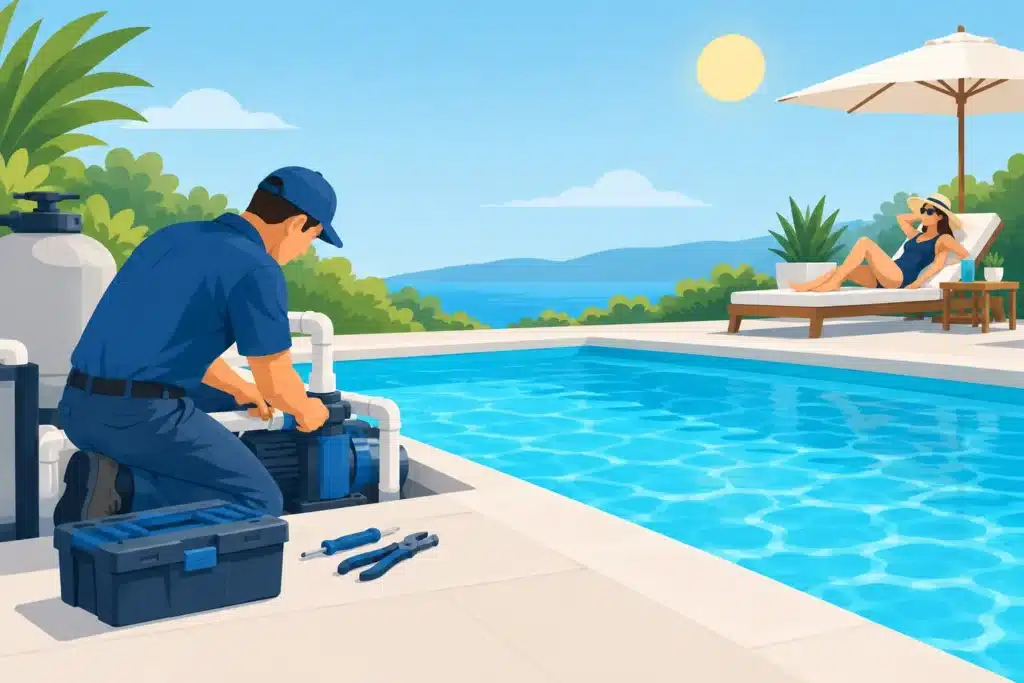
The circulation pump is the working heart of a pool. It moves water through the skimmer, filter, heater and returns, allowing treatment chemicals to do their job. A humming sound without water movement, a leak around the pump housing, air in the system or repeated electrical tripping all need attention.
Sometimes the solution is straightforward, such as replacing a worn seal, clearing a blockage or correcting an air leak on the suction side. In other cases, an ageing motor, damaged impeller or unsuitable pump size makes replacement the better long-term decision. Repairing a very old pump can cost less today, but a modern correctly sized option may reduce energy use and improve circulation for years to come.
Leaks in pipework, fittings and the pool shell
Evaporation is normal during warm, dry and windy weather, particularly when a pool is uncovered. A consistent or sudden loss of water is different. The cause may be a loose fitting, cracked pipe, damaged skimmer, leaking multiport valve or, less commonly, an issue with the pool structure.
Guesswork is rarely cost-effective. A proper assessment distinguishes normal evaporation from a genuine leak and identifies whether it is accessible equipment pipework or a more involved underground problem. Early leak repairs can prevent wasted water, chemical imbalance and damage to surrounding areas.
Filter, valve and pressure problems
A dirty or damaged filter can leave water dull even when chemical readings appear reasonable. Sand filters, cartridge filters and glass-media systems all need correct servicing at appropriate intervals. A worn multiport valve may also allow water to bypass the filter or leak to waste, making it harder to maintain clear water.
High pressure can indicate a filter that needs cleaning, while unusually low pressure may point to a circulation or suction issue. The readings only make sense alongside the whole system, which is why a technician will check more than the gauge before recommending work.
Heater and heat-pump faults
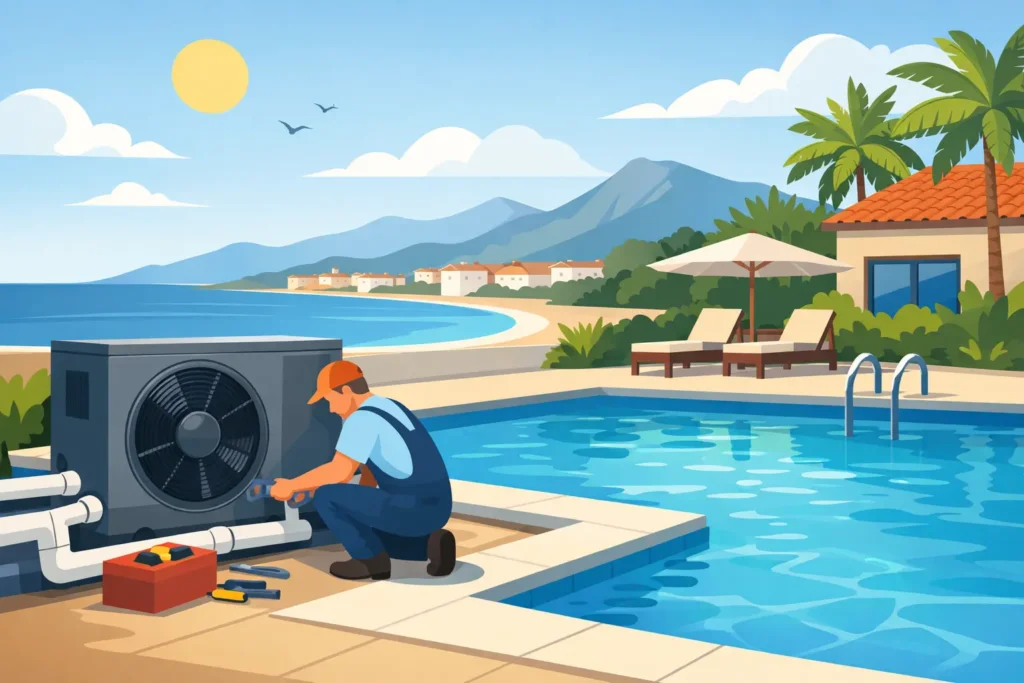
A heated pool should feel like a pleasure, not an expensive uncertainty. If your heat pump is running but not warming the water, the cause could range from restricted water flow or an incorrect setting to a sensor, fan or refrigerant-related fault. Electrical supply and control connections also need to be checked safely.
It is tempting to focus solely on the heater, but heat performance depends on the pool as a whole. Poor circulation, a blocked filter and heat loss from an uncovered pool can all make a healthy unit appear underpowered. For this reason, the best repair visit looks at operating conditions as well as the equipment itself.
Controls, timers and pool lighting
Timers, control panels, automation systems and lights make pool ownership easier, until they do not. Water exposure, sun, age and electrical faults can affect these components. A timer that no longer switches correctly may compromise filtration routines, while damaged underwater lighting should be dealt with by a qualified professional rather than treated as a cosmetic issue.
What a proper repair visit should involve
Good pool repairs begin with questions. When did the fault start? Has anything changed in the pool’s behaviour, water level, noise or electricity use? Is the property occupied full-time, used at weekends or prepared for guests? These details help narrow down the issue before work begins.
On site, the technician should inspect the relevant equipment, check water flow and pressure where appropriate, and identify the likely cause rather than simply replacing the first visible part. You should receive a clear explanation of the recommended repair, any parts required and the expected cost. If there is a sensible choice between repairing and replacing, the difference in reliability, efficiency and future maintenance should be made clear.
At Eco Pool Heaters, the aim is to provide practical advice that fits the pool, the property and how it is used. That may mean a targeted repair completed promptly, or a recommendation to replace a component that is no longer economical to keep repairing.
Repair or replacement: making the sensible choice
There is no single rule for every failed component. A relatively new pump with a damaged seal is often worth repairing. A pump that has failed repeatedly, runs loudly and uses more electricity than it should may be nearing the point where replacement offers better value.
The same principle applies to heaters. An older unit can sometimes be restored, but parts availability, condition and energy consumption matter. If a replacement is required, a modern electric heat pump matched to the pool volume and location can give more predictable comfort and lower running costs than an outdated system. Adding a quality solar cover makes that investment work harder by retaining warmth overnight, reducing evaporation and keeping debris out of the water.
A transparent estimate should allow you to make that decision without pressure. The cheapest immediate option is not always the most affordable over several seasons, particularly for pools used frequently or managed as part of a rental property.
Preventing repeat pool repairs
Not every fault can be avoided, but routine care catches many problems before they become disruptive. Keeping baskets clear, maintaining the correct water level, monitoring filter pressure and arranging periodic servicing all help equipment operate within its intended range.
There are four habits that make a meaningful difference:
- Run filtration for an appropriate period for the season and bather use, rather than relying on a fixed schedule all year.
- Check for drips, air bubbles in the pump lid, unusual noises and unexplained water loss before they worsen.
- Keep water chemistry balanced, as poorly balanced water can damage seals, heaters and metal components over time.
- Use a solar cover when the pool is not in use to reduce evaporation, retain heat and lessen the load on heating equipment.
For second homes and rental properties, regular maintenance provides reassurance when you are not there to notice a change. A technician can spot developing faults, keep the system clean and leave the pool presentable for owners and guests.
Choosing a local team for pool repairs
Pool systems vary widely across the Costa del Sol. Equipment may have been installed years apart, altered during renovations or selected without considering how the property is now used. A local technician who is prepared to assess the complete setup can give better advice than someone treating every problem as a standard call-out.
Look for clear communication, experience with pumps, filters, controls and heating equipment, and a willingness to explain the options in plain language. Availability of suitable parts matters too, especially where a repair affects water quality, safety or guest use. Most importantly, choose a team that will still be there for servicing and support after the immediate fault has been resolved.
A well-maintained pool should not demand constant attention. When something does go wrong, an accurate diagnosis and carefully completed repair can restore the quiet confidence that your pool is clean, comfortable and ready for the next sunny day.