A pool can look cloudy even when the circulation pump is running and chlorine has been added. For Costa del Sol homeowners, that is frustrating: the water may be safe one day, dull the next, and completely unsuitable for guests or holiday-rental arrivals. A professional cloudy pool water treatment service identifies what is actually causing the haze, then corrects the water and the equipment conditions that allowed it to develop.
Cloudiness is not a single problem with a single chemical fix. Fine debris, poor filtration, unbalanced water, algae in its early stages and a tired pump can all produce a similar milky appearance. Adding more products without testing first can make the problem harder, more expensive and slower to resolve.
Why pool water turns cloudy
Your filter is responsible for catching particles too small to remove with a leaf net. When it is dirty, undersized, damaged or not running for long enough, those particles remain suspended in the water. Saharan dust, pollen, sunscreen, garden debris and heavy use can put extra pressure on a residential pool system, particularly during warmer months and after a spell of wind.
Water balance also matters. Chlorine only works effectively within the right pH range, while high calcium levels, poor alkalinity control or stabiliser build-up can leave the water looking dull and reduce the effectiveness of your normal treatment routine. A pool can show a reasonable chlorine reading but still be unable to stay clear.
Early algae is another common cause. Before algae forms obvious green patches on walls or steps, it can create a grey or blue haze. In pools that are heated or covered for longer periods, regular circulation and correctly adjusted sanitiser levels are especially important. Heat and sunlight make a pool more inviting, but they can also accelerate water-quality changes when maintenance is missed.
What a professional cloudy pool water treatment service includes
The first job is diagnosis, not guesswork. A technician should assess the pool water with proper testing, inspect the circulation system and consider how the pool has been used recently. A clear answer depends on the whole picture: the water readings, filter condition, pump performance, cleaning history and the surrounding environment.
Accurate water testing and a targeted plan
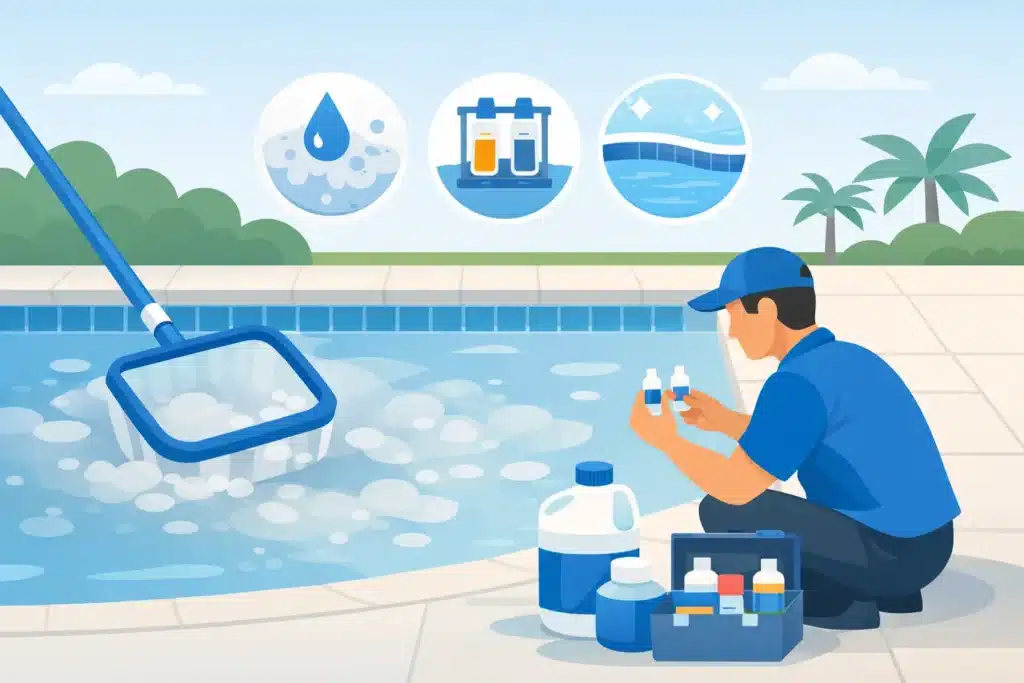
A professional test goes beyond a quick chlorine check. It assesses pH, sanitiser level, total alkalinity, calcium hardness and stabiliser where relevant. These readings show whether the water needs a controlled shock treatment, pH adjustment, algaecide, clarifier, partial dilution or another specific correction.
The right treatment depends on the cause. A clarifier may help a functioning filter capture very fine particles, but it cannot compensate for a broken pump or a filter that has not been cleaned. Equally, a shock treatment may be necessary for algae, but adding it without correcting pH and filtration may deliver only a short-lived improvement.
Filter, pump and circulation checks
Cloudy water often exposes an equipment issue that has been building quietly. Sand filters can become compacted or contaminated, cartridge filters may be blocked or worn, and multiport valves can fail internally. A pump may still make noise and move some water while delivering inadequate flow for effective filtration.
A thorough service checks that water is being drawn from the skimmers and main drain correctly, returned evenly to the pool, and circulated for an appropriate number of hours. It also looks for air leaks, blocked baskets, pressure concerns and timer settings that do not match the season or pool use.
For a holiday home, the timer is particularly important. A pool that looks acceptable after a quiet winter can become cloudy quickly once family, visitors or rental guests begin using it daily. Adjusting filtration time as conditions change is usually more cost-effective than repeatedly paying for emergency treatments.
Cleaning and removal of settled debris
Once treatment begins to gather particles together, debris may settle on the pool floor. It needs to be vacuumed away carefully rather than allowed to re-enter the circulation system. Brushing walls, steps and corners also helps remove early algae and improves contact between the treatment and pool surfaces.
In some cases, the fastest route back to clear water is to allow particles to settle and vacuum them to waste. This uses more water than standard vacuuming, so it should be chosen when appropriate rather than as an automatic step. A skilled technician will explain the trade-off and protect the pool level and equipment while the work is carried out.
Why quick fixes can cost more
It is tempting to buy a strong chemical product and hope the water clears overnight. Sometimes that works, especially after a minor weather event. More often, it masks the underlying issue. Repeated doses can push water chemistry further out of balance, overload the filter or leave a pool that clears briefly before turning cloudy again.
Avoid relying on visual appearance alone. Water can appear blue but still contain fine contaminants, while very clear water can have unsuitable chemical readings. Testing and circulation are what keep a pool reliably ready for swimming.
There is also a practical consideration for Costa del Sol properties that are empty for part of the year. If a water issue develops while you are away, a local service team can inspect the system, correct the cause and monitor the recovery rather than leaving the pool unattended with a one-off chemical dose.
Preventing cloudy water after treatment
Once the water is clear, a consistent maintenance routine is the best protection. The right programme will vary with pool size, bather load, exposure to trees, whether the pool is heated and whether it is covered. There is no single timer setting or chemical quantity that suits every pool.
A good routine includes regular testing, skimmer and pump-basket cleaning, filter maintenance, brushing and vacuuming, and seasonal adjustments to circulation. After periods of heavy swimming, strong winds or rainfall, it is sensible to check the water sooner rather than waiting for the next scheduled visit.
Solar covers can also support cleaner, more efficient pool operation when used properly. They reduce evaporation and retain heat, which is valuable for extending the swimming season. However, a cover should be managed alongside good circulation and water testing. Keeping a pool covered for extended periods without suitable filtration or treatment can trap heat and create conditions that need closer attention.
At Eco Pool Heaters, our technicians can assess both water quality and the equipment supporting it, from circulation and filtration to heating and covers. This joined-up approach is useful when a recurring cloudy-water problem points to an ageing pump, poor filtration set-up or a maintenance schedule that no longer fits the way the pool is used.
When to call for help
Book a professional inspection if the pool remains cloudy after normal cleaning and balancing, if you cannot see the main drain clearly, or if cloudiness returns within days. Prompt attention is also sensible when the filter pressure behaves unusually, the pump loses flow, algae is visible, or guests are due to arrive.
Clear water should not rely on constant trial and error. With accurate testing, properly working equipment and regular care suited to your property, your pool can stay inviting through the months you want to use it most.