A pool that looks inviting but costs too much to run is often being held back by ageing equipment, not the pool itself. The right pool equipment upgrades can make a noticeable difference to water temperature, electricity use, water quality and the amount of attention your pool needs – particularly for homes and holiday properties on the Costa del Sol.
For many owners, the first sign of a problem is a heater that struggles in spring, a noisy pump, rising bills or water that never quite stays as clean as it should. Replacing one poorly performing component can help, but the best results usually come from looking at how the whole system works together.
Start with the upgrades that affect daily running costs
Not every pool needs a full refurbishment. A sound shell, pipework and filtration system may only need a few carefully chosen improvements. The priority is to identify the equipment that is costing you most in energy, heat loss or avoidable maintenance.
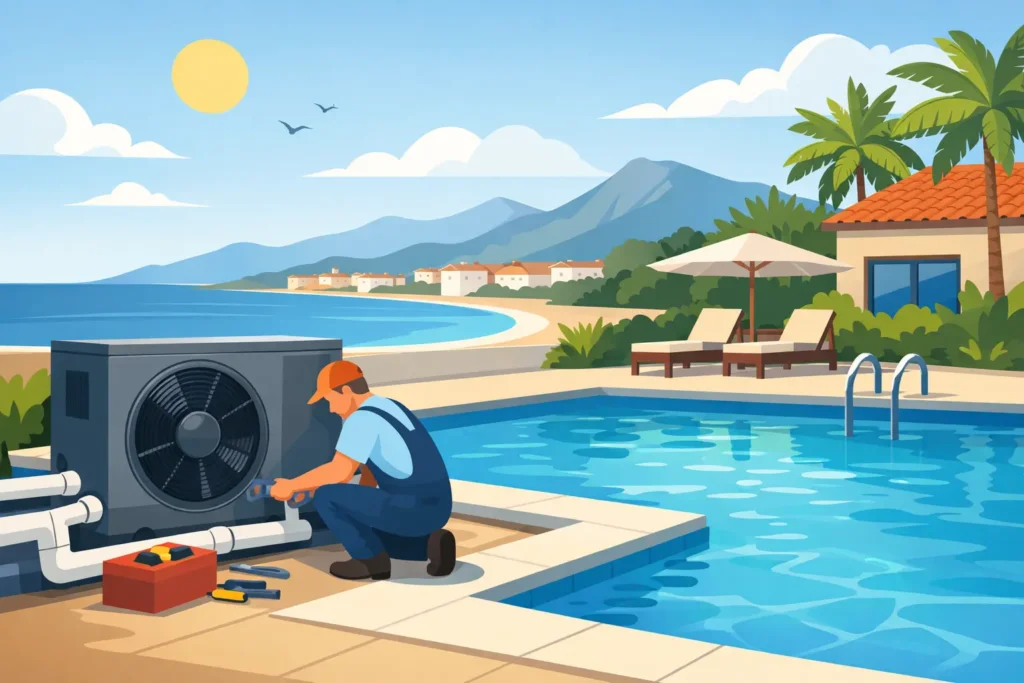
Heating is often the biggest opportunity. Older electric heaters can be expensive to operate, while an undersized or poorly matched heat pump may run for long periods without bringing the water to a comfortable temperature. A modern, correctly specified air-source heat pump is designed to transfer ambient heat into the pool water efficiently. In the mild Mediterranean climate, this can be a practical way to extend swimming from the cooler shoulder months into spring and autumn.
The specification matters as much as the unit itself. Pool volume, exposure to wind, shaded areas, desired temperature, whether the property is occupied year-round, and the presence of a cover all affect the recommended capacity. A heat pump chosen purely on headline price may prove inadequate for a larger, exposed villa pool.
At Eco Pool Heaters, Norsup heat pumps are selected and installed around these real-world conditions. Their European build quality is matched with a five-year full warranty and a ten-year heat exchanger warranty, giving homeowners a stronger basis for a long-term investment.
A solar cover is not an optional extra
A solar pool cover is one of the most cost-effective additions to a heated pool. Heating water is only half the job. If that heat escapes overnight through evaporation, the system must keep replacing it the following day.
A quality solar cover helps retain warmth, reduces evaporation and limits the amount of debris entering the water. That means less heat loss, less water replacement and, in many cases, less demand on the filtration and chemical system. It also makes the pool more likely to be ready when you want to use it, rather than requiring a day or two of heating after a cooler spell.
There is a practical trade-off. A cover needs to be put on consistently to deliver its full benefit, which is why a roller can be worthwhile for larger pools or properties used by guests. For holiday-rental owners, a cover that is straightforward for cleaners, guests or maintenance teams to manage is usually more valuable than one with features that are rarely used.
Upgrade heating and heat retention together
A heat pump and solar cover should be considered as a pair. The heat pump provides efficient, controllable warmth; the cover protects that warmth when the pool is not in use. Installing one without considering the other can limit the return on your investment.
This is especially relevant in coastal locations, where evening breezes can increase heat loss. It also applies to inland properties around Coín and Antequera, where temperatures can drop more sharply overnight outside the summer months.
Improve circulation before water problems become expensive
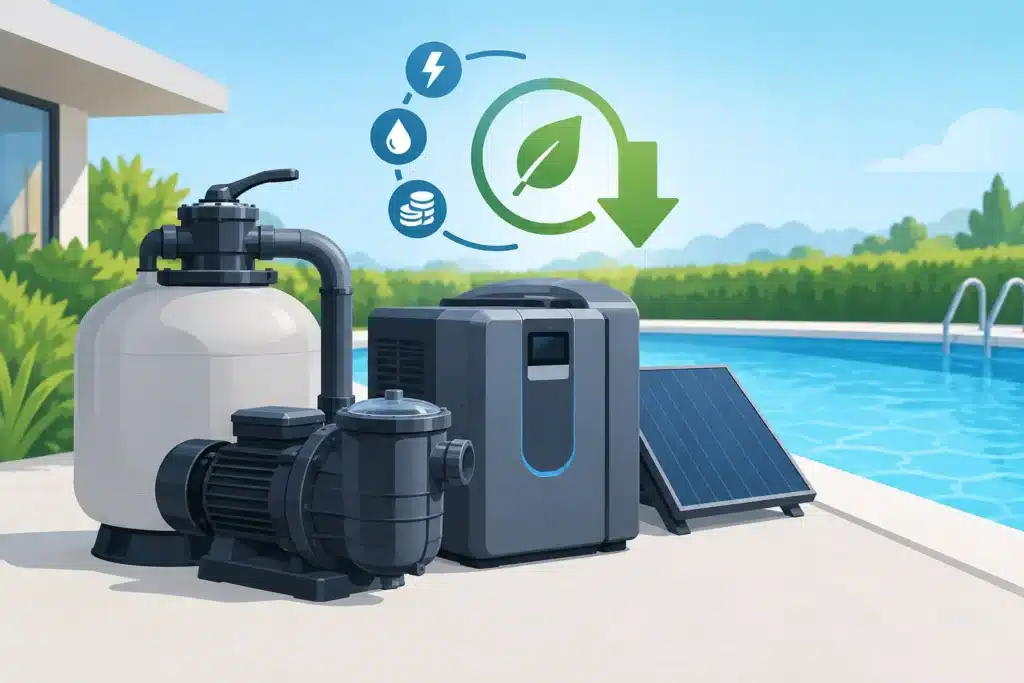
The circulation pump is the working heart of the pool. It moves water through the filter and any heating or treatment equipment, helping to prevent stagnant areas, cloudy water and uneven chemical distribution. A pump that is noisy, leaking, repeatedly tripping the electrics or losing flow deserves attention before it fails altogether.
In some cases, a repair is the sensible choice. A failed seal, worn basket or minor electrical fault does not always justify replacement. However, an old single-speed pump that runs for many hours every day may be worth replacing with a modern variable-speed model.
Variable-speed pumps can operate at lower speeds for routine filtration, using substantially less electricity than a pump constantly running at full output. They can then increase speed when needed for backwashing, vacuuming or running water features. The savings depend on the pool’s plumbing, filter size and required turnover rate, so settings should be configured correctly rather than left at a generic factory programme.
A quieter pump can be another important benefit for villas where the plant room is close to outdoor dining areas, terraces or neighbouring properties.
Consider the filter, controls and smaller fittings
Equipment upgrades are not limited to the largest items. An inefficient filter, ageing multiport valve, cracked pipework or unreliable timer can all undermine the performance of an otherwise good system.
A filter should match the pool’s water volume and the pump’s flow rate. If it is undersized, damaged or allowing debris back into the pool, water quality can become difficult to manage. Sand filters may benefit from media replacement, while some older installations are better served by a full filter upgrade. The right answer depends on condition, access and the rest of the equipment arrangement.
Modern timers and controls can also remove unnecessary running time. Instead of relying on someone to switch equipment on and off manually, programmed schedules can align filtration and heating with the times the pool is used. For second homes and rental properties, this adds useful consistency when owners are away.
It is worth avoiding a piecemeal approach where new equipment is connected to failing valves, undersized pipework or an overloaded electrical supply. A professional assessment should check compatibility before work begins. That protects the equipment warranty and reduces the risk of a new installation inheriting an old problem.
Plan pool equipment upgrades around how you use the property
A permanent family home in Marbella has different needs from a holiday villa in Estepona or a rental property in Mijas. A family may prioritise a reliably warm pool for early-morning and evening swimming. A rental owner may place more value on simple operation, dependable filtration and equipment that keeps the pool presentable between changeovers.
Think about these practical questions before choosing equipment:
- How many months of the year do you want to swim?
- Is the pool exposed to wind, shade or cooler night temperatures?
- Are electricity costs higher than expected for the pool’s size?
- Is the property vacant for long periods?
- Does the existing equipment have sufficient space, drainage and electrical capacity for an upgrade?
These answers help determine whether heating, a cover, pump replacement, filtration work or controls should come first. They also prevent paying for more equipment than the pool genuinely needs.
Installation quality protects the investment
Premium equipment cannot compensate for poor installation. Correct pipe sizing, water flow, electrical protection, drainage, positioning and commissioning all influence how reliably a heat pump or pump will perform.
For heat pumps, location is particularly important. The unit needs suitable airflow and service access, while pipe runs should be planned to avoid unnecessary heat loss and pressure restrictions. The installer should confirm that the existing circulation system can provide the required flow and explain how the controls will be used day to day.
Once the work is complete, ongoing servicing is just as valuable. Regular checks can spot leaks, deteriorating seals, blocked baskets, poor water balance and reduced flow before they turn into a breakdown during the period you most want to use the pool. This is particularly reassuring for owners who do not live at the property full-time.
The most worthwhile upgrade is rarely the most visible one. It is the one that makes the pool easier to enjoy, more economical to run and less likely to demand urgent attention. A tailored inspection of your existing system is the sensible place to start, because a pool that works efficiently in every season gives you far more reason to use it.