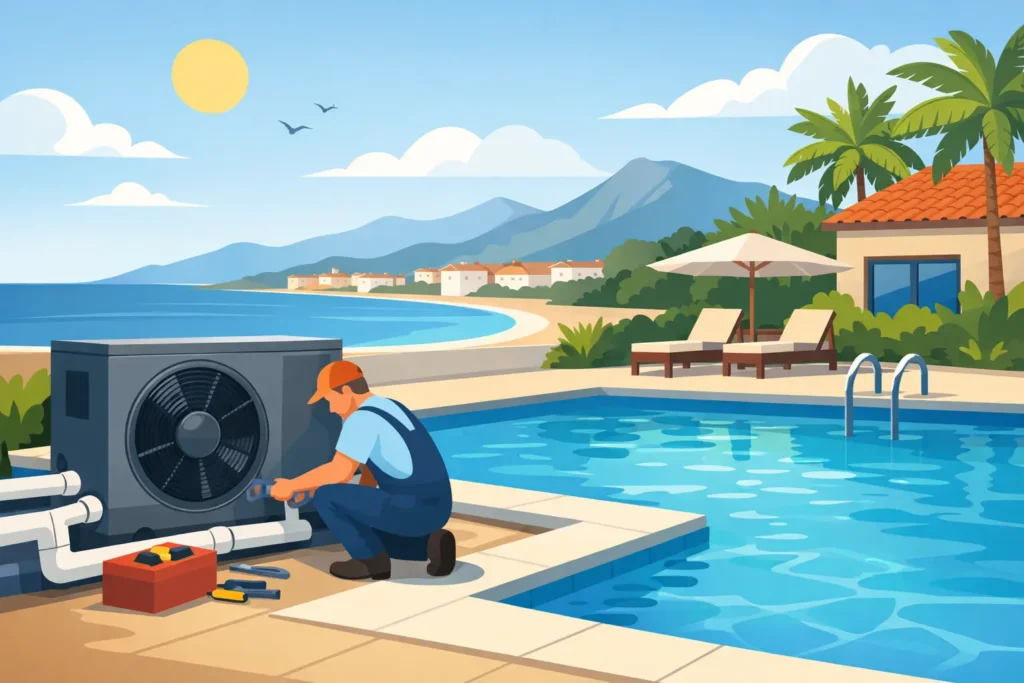
Cloudy water can appear surprisingly quickly in a Costa del Sol pool. One week the pool looks inviting; the next, fine dust, pollen, sunscreen residue or algae seems to linger no matter how often it is treated. Pool filter repair Costa del Sol is often the answer, but the filter is not always the only cause. A proper inspection identifies whether the problem lies inside the filter tank, in the pump, with the pipework or in the pool’s water balance.
For homeowners, villa owners and property managers, the aim is simple: clear, safe water and equipment that works efficiently without constant attention. Acting early can avoid a small seal, valve or pressure issue becoming a more expensive repair – or leaving a holiday property with an unusable pool.
What a pool filter actually does
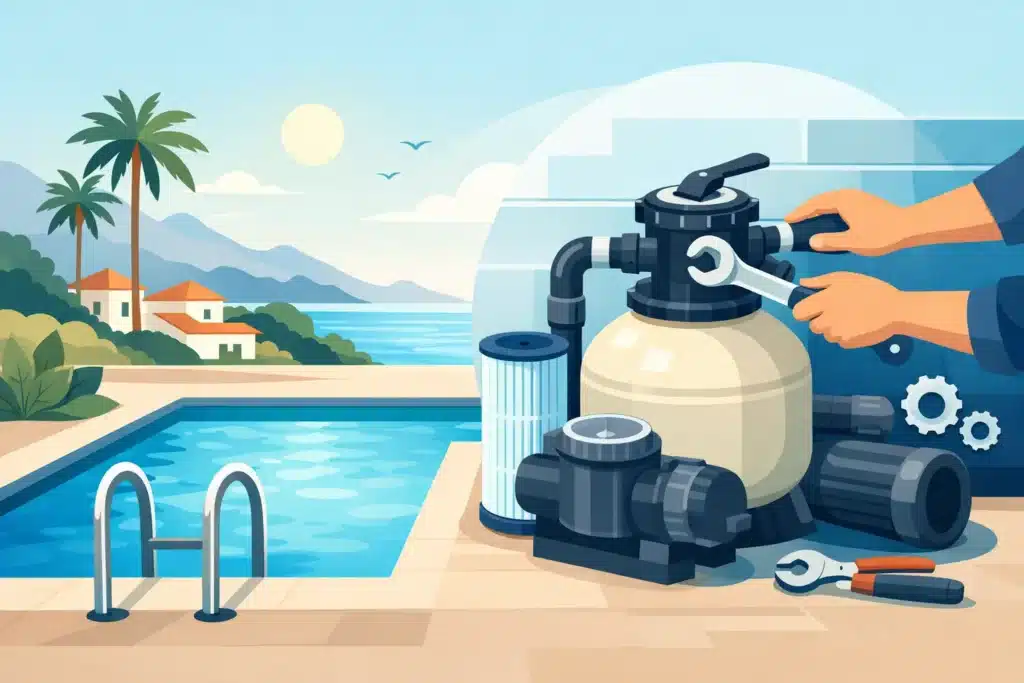
The filter is responsible for removing the fine debris that a skimmer basket cannot catch. Water is drawn from the pool by the pump, pushed through the filter media and returned cleaner through the inlet jets. Depending on the installation, that media may be sand, glass, cartridges or diatomaceous earth.
On the Costa del Sol, filters work hard. Wind-blown dust, high bather numbers in holiday lets, nearby building works, leaves, insects and long periods of warm weather all add to the load. A solar cover can reduce evaporation and keep debris out when the pool is not in use, but it does not remove the need for a correctly functioning filtration system.
When filtration is poor, adding more chemicals rarely solves the underlying issue. Chemical treatment and circulation need to work together. If dirty water is not passing properly through the filter, the pool may remain dull, consume more products and be harder to keep balanced.
Signs you may need pool filter repair Costa del Sol
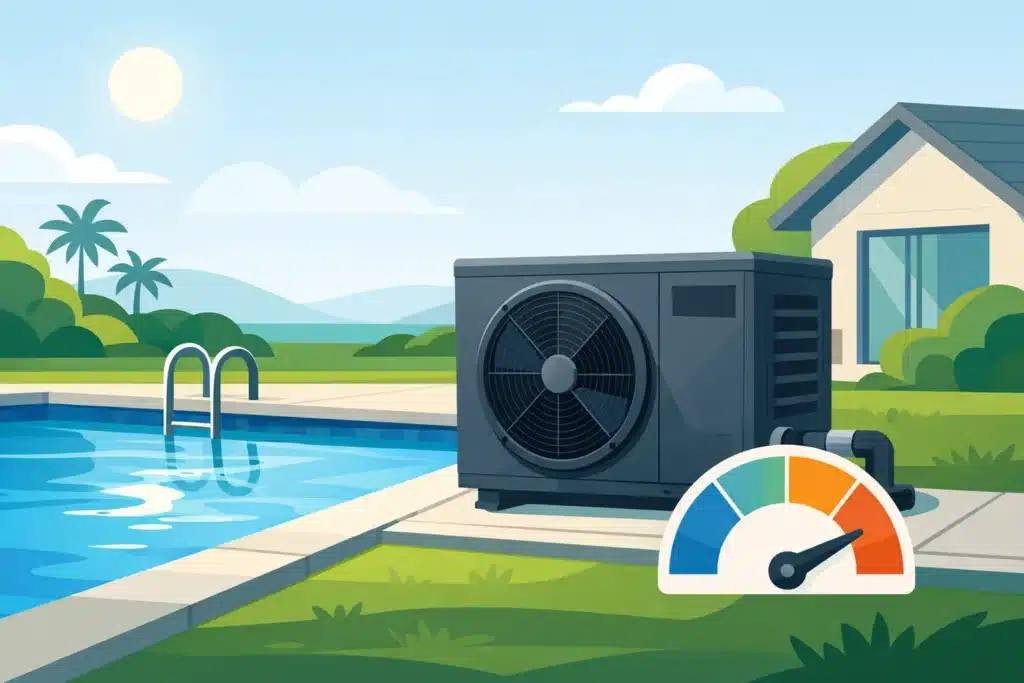
A pressure gauge provides one useful clue. Every filter has a normal operating pressure when it is clean and running correctly. A reading significantly higher than usual can indicate a blocked filter, while unusually low pressure may point to an air leak, pump issue, blockage before the pump or an inaccurate gauge.
Water returning weakly from the pool jets is another warning sign. So is water that becomes cloudy soon after vacuuming, even when chlorine and pH readings appear acceptable. Sand or glass media appearing in the pool, water leaking from the multiport valve, or a filter tank that drips around a joint should also be checked promptly.
Some faults are more subtle. A pool may look acceptable while the pump runs longer than it should, the pressure fluctuates or the system repeatedly loses prime. These issues waste electricity and place avoidable strain on pumps and heaters. For pools with an electric heat pump, reliable flow is particularly important, as low flow can trigger protection settings and reduce heating performance.
Repair, cleaning or replacement: the right answer depends
Not every filter issue needs a new filter, and not every dirty-looking pool needs a repair. Sand and glass filters commonly need a backwash and rinse when pressure rises above the normal clean level. Cartridge filters need to be removed and cleaned carefully, while damaged cartridges should be replaced rather than forced back into service.
However, repeated backwashing is not a cure for worn components. A multiport valve may have a damaged spider gasket, allowing water to bypass the filter and return debris to the pool. A failed pressure gauge can lead to unnecessary cleaning or missed blockages. Split laterals inside a sand filter can allow media into the pool, and a perished O-ring can create leaks or draw air into the system.
Filter media also has a service life. Sand can become compacted or channelled over time, allowing water to pass through without being properly filtered. Glass media is often a durable, efficient upgrade, but it still requires the correct grade, installation and backwashing routine. Whether media should be changed depends on its condition, the pool’s use and the history of water quality problems.
Replacement becomes the sensible option when a tank is cracked, badly weathered, incorrectly sized for the pump, or fitted with parts that are no longer practical to source. A technician should explain this clearly, rather than treating replacement as the default answer.
Why the pump and filter should be assessed together
A filter cannot perform well if the pump is not delivering the right flow. Equally, an oversized pump can force water through the filter too quickly, reduce filtration quality and put pressure on valves, seals and pipework. The two pieces of equipment are a working pair.
During a repair visit, it is sensible to check the pump basket, impeller, lid seal, valves, unions and suction lines as well as the filter itself. Air bubbles under the pump lid or blowing from the return jets can indicate a suction-side air leak. A blocked impeller may reduce flow. A leaking union can gradually waste water and make the equipment area messy and unsafe.
For older installations, the plumbing layout matters too. Undersized pipework, too many restrictive bends or incorrectly positioned valves can create flow problems that look like a filter fault. This is why a quick guess based on cloudy water can be costly. Testing the system as a whole produces a more dependable repair.
A practical approach to diagnosis and repair
A skilled technician will normally begin by checking the pool water, because poor circulation and poor chemistry often overlap. They will then compare filter pressure with the expected running pressure, inspect for leaks and test the pump’s operation.
The filter is isolated before the tank or valve is opened. This is essential: opening a pressurised filter can cause injury and damage equipment. Once safe, the technician can inspect the internal components, condition of the media and seals, then repair or replace the affected part.
After reassembly, the system should be restarted, primed and checked for correct flow, stable pressure and leaks. The final step is confirming that valves are in the correct operating position and explaining any changes to the pool owner or maintenance team. Clear advice matters, particularly for second-home owners who may not be present every week.
Preventing repeat filter problems
Regular maintenance is the most cost-effective way to protect filtration equipment. The right routine varies with pool size, season, surrounding trees, cover use and bather load, but a few habits make a genuine difference:
- Empty skimmer and pump baskets before debris restricts flow.
- Backwash sand or glass filters only when the pressure rise indicates it is needed.
- Keep water levels high enough for the skimmer to draw properly.
- Maintain balanced water chemistry to protect seals, equipment and filter media.
- Check for drips, air bubbles and changes in return-jet flow before they worsen.
Over-backwashing deserves particular attention. It can waste water, remove heat from a warmed pool and disrupt the filter bed before it has captured enough fine particles. Under-backwashing, on the other hand, restricts circulation. The correct timing is based on pressure and performance, not simply a fixed calendar date.
A good solar cover also supports cleaner operation by limiting debris and evaporation. It will not replace filtration, but it can reduce the workload on the system while helping retain the warmth produced by a heat pump.
Local support for homes and rental properties
Pool equipment faults do not always happen when it is convenient. For rental properties, a filter problem can become urgent shortly before guests arrive. For permanent residents, it can quickly take the enjoyment out of a pool that should be straightforward to maintain.
Eco Pool Heaters provides hands-on support for pool equipment repairs across the Costa del Sol, with transparent recommendations based on the condition of the system rather than a one-size-fits-all solution. Where a repair is viable, the focus is on restoring reliable circulation efficiently. Where an upgrade is better value, the reasons should be clear, including compatibility with the existing pump, heating equipment and pool use.
If your water is losing clarity, pressure has changed, or equipment is leaking, do not wait for the issue to become a complete breakdown. A timely inspection can restore the quiet, reliable filtration that lets you enjoy the pool rather than manage it.